Cichlids (Cichlidae)

Oscar Cichlid

Astronotus ocellatus

The oscar cichlid (Astronotus ocellatus) belongs to the family Cichlidae. This popular aquarium fish comes in various color forms and unique morphological variants with enlarged fins. Before acquiring one, account for its large size and long lifespan.

Tank
from 500 L (132 gal)
Temperature
22 – 25 °C (72 – 77 °F)
Size in aquarium
35 cm (14 in)
Acidity
pH 6–8

Predator: dangerous to small fish

Natural rangeRange on the map
  • South America area
  • Argentina
  • Brazil
  • Colombia
  • French Guiana
  • Peru

Tank conditions

Plan the tank stocking
Temperature
22 – 25 °C (72 – 77 °F)
Water pH
Slightly acidic (6) – Slightly alkaline (8)
Water dH
Soft (5) – Very hard (19)
Water salinity
no salt (freshwater)
Size in aquarium
35 cm (14 in)
Lifespan
20 years
Temperament
Predator, but semi-peaceful gets along with large ones
Toward small fish
predator
Required aquarium volume
from 500 L (132 gal)
Lighting
dimmed
Substrate
gravel (regular)
Water flow
none or stagnant (no flow)
Swimming level
middle level
Feeding
Any (universal)
Keeping
Pair (male/female)
Jumping
low
  • Lifespan. A lifespan to expect under good care, not a measured value: it depends heavily on tank volume, water quality and diet — and for selectively bred forms, on their origin as well.
  • Toward small fish. Based on the Predators category in the catalog or the temperament in the species parameters. “A risk to small fish” means the species is not a predator by habit, yet will swallow any fish that fits in its mouth.
  • Required aquarium volume. This is a husbandry recommendation, not a measured value: the volume depends on the keeping mode (pair (male/female)), footprint, decor and tank mates.

Care and keeping

Description

The oscar cichlid is a large, robust fish with a tall body and rounded dark fins. Wild fish show a red-brick coloration with dark spots. Selective breeding has produced many color varieties that differ greatly in pattern and hue.

Habitat

The oscar cichlid's natural range is the Amazon basin in South America and its tributaries. The species has also been introduced to the United States and Asian countries such as Singapore. In nature, they prefer shallow coastal areas, small eddies, and zones with submerged tree roots that provide shelter. Most fish sold in the hobby were bred commercially and have never lived in the wild.

Behavior and Compatibility

Oscar cichlids can be kept alone or in small groups; the latter is preferable. Their size and feeding habits limit choice of tank mates to large, calm species. They are intelligent and can be tamed, even allowing themselves to be petted, but caution is warranted. They have small but sharp teeth and may bite their keeper.

Care and Maintenance

A pair of adults needs about 500 litres; here, bigger is better. Oscar cichlids like to dig in the substrate; their size makes this undesirable in a confined tank unless it is very large. Use large stones and boulders instead. Roots, branches, and driftwood, firmly anchored to the bottom, are important. Only artificial plants, preferably omitted entirely, should be used, as live plants will be quickly destroyed. Commercial oscar cichlids have lived many generations away from their natural range and have adapted to a wide range of water parameters. They do well in both soft and moderately hard water, and in slightly alkaline or slightly acidic conditions. See the section on water chemistry for more detail. These fish produce much waste; in a 500-litre tank, change 30–50% of the water weekly; in larger tanks, 25%. Clean the substrate regularly. Use an effective external filter; internal filters are often damaged by these fish. Secure the heater to the décor or place it where the fish cannot reach it, ensuring good water circulation to prevent hot spots. You also need lighting and an air pump.
Diet

In the wild, oscar cichlids eat anything they can catch: small fish, fruit fallen into the water. At home they accept all foods: dry prepared foods (pellets, flakes, tablets), frozen and live foods (small fish, earthworms, insects, and more). A common mistake is feeding oscar cichlids meat such as beef heart or liver. This is wrong; such a diet will likely cause digestive problems because fish cannot digest mammalian fats. Do not overfeed. Offer only what the fish can eat in 3–4 minutes.

Breeding and Reproduction

Oscar cichlids are bred commercially at large scale; their size and fecundity make home breeding impractical. They form permanent pairs, but not every individual makes a suitable partner. Usually 10 or more juveniles are stocked together; as they grow, some form pairs and are then separated. During spawning, the parents select and clean a spawning site, then lay eggs. A female can lay over 2,000 eggs, most of which develop successfully.

Diseases

This species is highly robust. In the wild, oscar cichlids scavenge dead fish and organic matter, which has given them a strong immune system. They seldom experience health problems.

How to choose

When buying an oscar cichlid, choose active individuals with clean fins and no visible damage or lesions on the body. Avoid fish with a sunken belly, lethargy, or cloudy eyes, as these may indicate chronic disease or poor conditions. In the shop, fish should show interest in food and display the curiosity typical of the species. Given the territorial nature of the species, buy juveniles from the same group so they form a stable pair later, or buy a single healthy young fish for solitary keeping.

Frequently asked questions

The essentials: size, tank volume, water parameters and care

How big does Oscar Cichlid get?

An adult reaches 35 cm in length. Plan the tank around the maximum size: the fish quickly outgrows a cramped setup.

What size aquarium does Oscar Cichlid need?

The recommended volume is 500 L. A smaller tank speeds up nitrate build-up and raises stress levels.

What water parameters does Oscar Cichlid need?

Temperature 22–25 °C, pH 6–8, hardness 5–19 dGH. Stability matters more than exact values: sudden swings are harder on the fish than a small deviation from the ideal.

How long does Oscar Cichlid live?

Around 20 years when kept properly. Lifespan depends directly on tank volume, water quality and a varied diet.

Is Oscar Cichlid aggressive?

Temperament: predator, but semi-peaceful (gets along with large ones). This is a predatory species — any fish small enough to fit in its mouth will eventually be eaten.

How many Oscar Cichlid should be kept together?

Recommended setup: pair (male/female). Ignoring this is a common cause of stress and disease.

What does Oscar Cichlid eat?

Diet type: any (universal). Feed small portions that are finished within a couple of minutes — overfeeding does more harm than underfeeding.

What is the scientific name of Oscar Cichlid?

The scientific name of the species is Astronotus ocellatus, family Cichlids (Cichlidae). It also appears in the literature as: Acara compressus, Acara hyposticta, Acara ocellatus.

Similar fishes

Matched by family, categories and overlapping keeping conditions

Midas Cichlid

Midas Cichlid

Amphilophus citrinellus

Cichlids (Cichlidae)

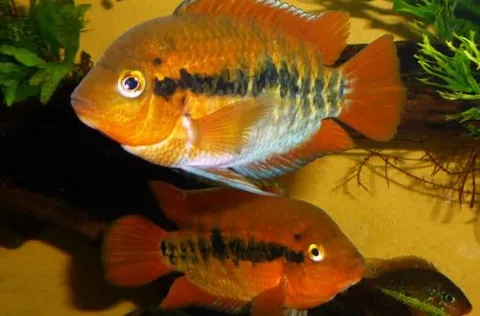
The Midas Cichlid, scientifically known as Amphilophus citrinellus, belongs to the family Cichlidae. The common name references the mythical King Midas and his endless greed. Watching this fish's behaviour, you will…

Rainbow Cichlid

Rainbow Cichlid

Herotilapia multispinosa

Cichlids (Cichlidae)

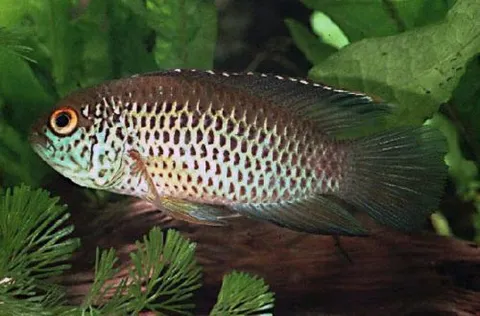
Herotilapia multispinosa, known as the rainbow cichlid, belongs to the family Cichlidae. The species was formerly called Archocentrus multispinosus. It is easy to keep and breed, undemanding in diet, and compatible with…

Yellow-Eyed Cichlid

Yellow-Eyed Cichlid

Nannacara anomala

Cichlids (Cichlidae)

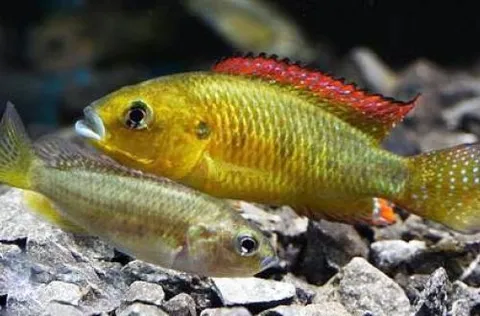
Nannacara anomala, also known as the Yellow-Eyed Cichlid or Golden Dwarf Cichlid, belongs to the family Cichlidae. This fish attracts attention with its vibrant coloration, and its unpretentious and friendly nature…

Haplochromis philander

Haplochromis philander

Pseudocrenilabrus philander

Cichlids (Cichlidae)

Haplochromis philander, known to scientists as Pseudocrenilabrus philander, belongs to the Cichlidae family. This fish is outwardly attractive but has a wayward character; males show belligerence towards each other and…

Other scientific names and conservation status

Other scientific names
Acara compressus, Acara hyposticta, Acara ocellatus, Astronotus orbiculatus, Cychla rubroocellata, Lobotes ocellatus
Categories
Cichlids
Conservation status
Least concernLC