Temperature20 – 28 °C
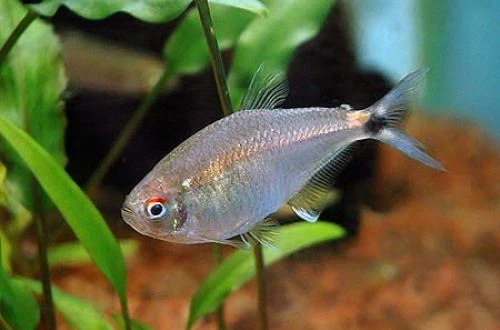
The two-spotted Astyanax, scientifically known as Astyanax bimaculatus, is a member of the Characin family. Despite its undemanding nature in terms of care and ease of breeding, as well as excellent compatibility with most other fish species, this species has not become widespread among aquarists. This is likely due to its rather modest, monochromatic coloration.
Adults typically reach 10–15 cm in length. Differences between males and females are quite subtle, making visual sex determination difficult. These fish are predominantly silvery in color, with transparent fins. A distinctive feature of their body pattern is a dark dash located at the base of the caudal fin, complemented by two light spots.
The natural habitat of these fish covers vast territories of Central and South America, extending from Panama all the way to Argentina. Two-spotted Astyanax can be found in a wide variety of biotopes: they can be observed in fast-flowing streams and rivers, as well as in the calm waters of swamps, lakes, and other bodies of water.
The two-spotted Astyanax is characterized by a peaceful disposition towards other aquarium inhabitants. However, their high activity can be a problem for slow-moving or very small species. Therefore, tank mates should be other active fish of comparable size. These fish prefer to live in shoals of at least 8–10 individuals.
For a comfortable keeping of a shoal of 8–10 two-spotted Astyanax, an aquarium of at least 432 L will be required. Thanks to their wide natural range, these fish demonstrate adaptability to various living conditions: they feel equally well in aquariums with dense thickets of aquatic plants and in more open tanks. When decorating, it is advisable to give preference to plants with stiff leaves, such as Anubias, various aquatic mosses, or ferns, or to use artificial alternatives. Delicate plant species may be damaged or eaten. To maintain the long-term health of the fish, it is critically important to ensure the stability of water parameters within acceptable hydrochemical values and temperatures. In addition, it is necessary to prevent the accumulation of dangerous concentrations of nitrogen cycle products – ammonia, nitrites, and nitrates. These tasks are effectively solved with a powerful filtration system, regular weekly partial water changes with fresh water, and systematic removal of organic waste, such as food remnants and excrement.
This species is omnivorous and readily accepts a variety of foods intended for aquarium fish. The daily diet can include dry foods, such as flakes or granules, supplemented with live or frozen delicacies, such as Artemia, Daphnia, or bloodworms.
Successful breeding of this species in a home aquarium is not uncommon. Sometimes, a diet enriched with high-protein foods serves as a stimulus for spawning. During the breeding period, some females show a noticeable increase in their abdomen due to ripening eggs. Spawning usually occurs near the bottom, among plant thickets (if present), or directly on the substrate. Parental instincts are absent in the two-spotted Astyanax, so adult fish readily eat both their own eggs and fry. To preserve offspring, aquarists can use one of two approaches. The first method involves transferring several females with rounded bellies and two males to a separate spawning aquarium, maintaining a 2:1 ratio. After the eggs are laid and fertilized, the parents are returned to the main aquarium. The second method involves carefully collecting already laid eggs from the main aquarium. It is worth noting that one female can lay up to 1000 eggs, which makes the second method quite laborious. Fry hatch from the eggs in approximately 24 hours, and after another 12 hours, they begin to swim freely in search of food. Specialized powdered foods are suitable for feeding them.
Specific diseases that affect only this particular fish species have not been identified. When kept in suitable conditions, including high water quality, a balanced diet, and peaceful tank mates, health issues usually do not arise. The most common cause of illness is a deterioration of living conditions, which weakens the immune system and makes the fish susceptible to infections that are always present in their environment. Upon noticing initial signs of sickness (such as lethargy, emaciation, refusal to eat, or clamped fins), it is crucial to immediately check the basic water parameters. Often, restoring acceptable living conditions will lead to self-recovery, but if the fish is too weak or has suffered visible damage, medicinal treatment may be required.
When purchasing, choose active, mobile individuals who show interest in food and stay in the water column. Avoid fish with signs of emaciation, scale damage, cloudy eyes, or an unnatural coating on the body. Since the species often enters the trade as an accidental bycatch with other characins, carefully examine the shoal for species-specific characteristics: the presence of a characteristic dark spot at the base of the tail and pronounced silvery coloration. Given the high level of stress during transportation, prefer individuals who appear calm but not sluggish, and do not show signs of rapid breathing.
The essentials: size, tank volume, water parameters and care
An adult reaches 10–15 cm in length. Plan the tank around the maximum size: the fish quickly outgrows a cramped setup.
The recommended volume is 432 L. A smaller tank speeds up nitrate build-up and raises stress levels.
Temperature 20–28 °C, pH 5.5–7.5, hardness 2–21 dGH. Stability matters more than exact values: sudden swings are harder on the fish than a small deviation from the ideal.
Around 8 years when kept properly. Lifespan depends directly on tank volume, water quality and a varied diet.
Temperament: peaceful (regular). Keep this in mind when choosing tank mates.
Recommended setup: group (8–10 individuals). Ignoring this is a common cause of stress and disease.
Diet type: any (universal). Feed small portions that are finished within a couple of minutes — overfeeding does more harm than underfeeding.
The scientific name of the species is Astyanax bimaculatus, family Acestrorhamphidae. It also appears in the literature as: Astianax bimaculatus, Astyanax fasciatus, Poecilurichthys brevoortii.
The water suits 198 of 208 plants in the catalogue — the easiest ones are shown first.
Afzelius's AnubiasAnacharisAnubiasBrazilian PennywortDwarf CloverDwarf CloverDwarf HygrophilaDwarf SagittariaDwarf ValGuppy GrassHornwortJava FernJava MossMoneywortMud SwordNair's LagenandraNarrow Leaf AnacharisNarrow-leaf CloverStringy MossSüsswassertangTaiwan MossTape GrassTemple PlantUssuri Watermilfoil
Matched by family, categories and overlapping keeping conditions
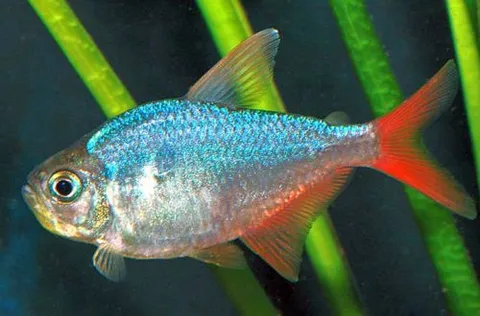
Hyphessobrycon columbianus
The Colombian Tetra (Hyphessobrycon columbianus) is an attractive and peaceful fish belonging to the family Acestrorhamphidae. Its care is straightforward, making it an excellent choice for aquarists. It harmonizes well…
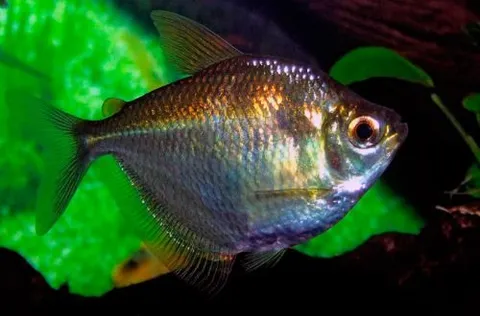
Brachychalcinus orbicularis
The scientific name Brachychalcinus orbicularis is assigned to the Orbicular Tetra, also known as the Discus Tetra, belonging to the Acestrorhamphidae family. This fish received its second name due to the similarity of…
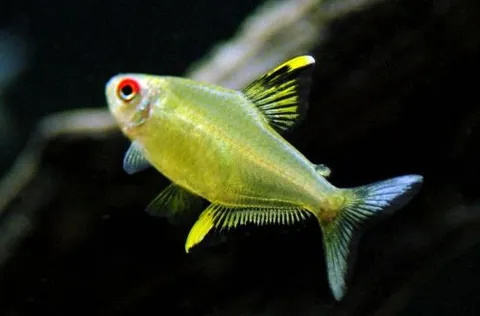
Hyphessobrycon pulchripinnis
The Lemon Tetra, or Hyphessobrycon pulchripinnis, is a representative of the Acestrorhamphidae family. This fish attracts attention with both its appearance and behavior. Its coloration, ranging from yellow to lemon,…
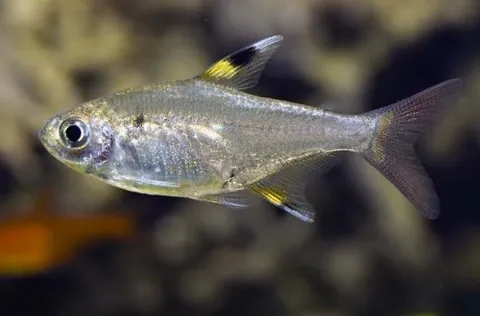
Pristella maxillaris
The Albino Pristella, also known as the Albino X-Ray Tetra, scientifically classified as Pristella maxillaris, belongs to the Acestrorhamphidae family. This species is considered one of the most common and accessible…