Aquarium plants
Page 4 of 5
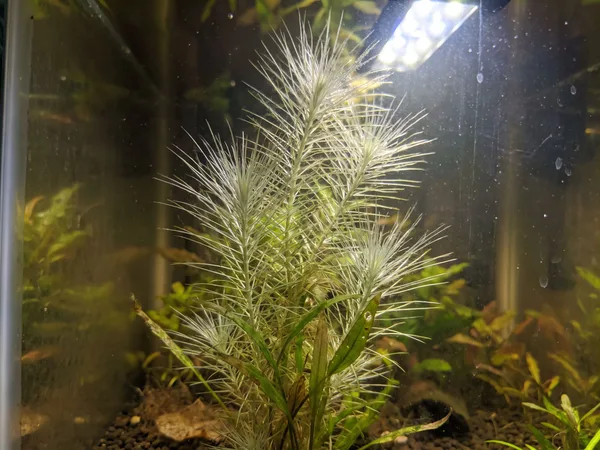
Needle-leaf Pipewort
Eriocaulaceae
Eriocaulon setaceum
A tall pipewort with white needle-thin leaves and dozens of side shoots, from the waters of Southeast Asia and Australia. One of the plants people build a whole tank around.
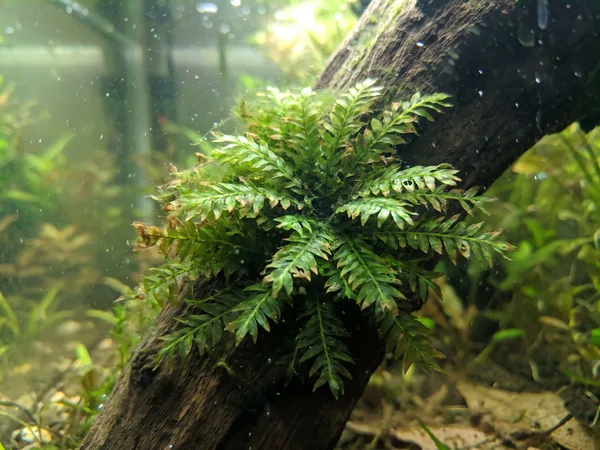
Noble Fissidens
Fissidentaceae
Fissidens nobilis
A large, stiff moss whose shoots look like little fern or palm fronds — the leaves sit in two rows in one plane. Slow, striking, and often confused with its smaller relative.
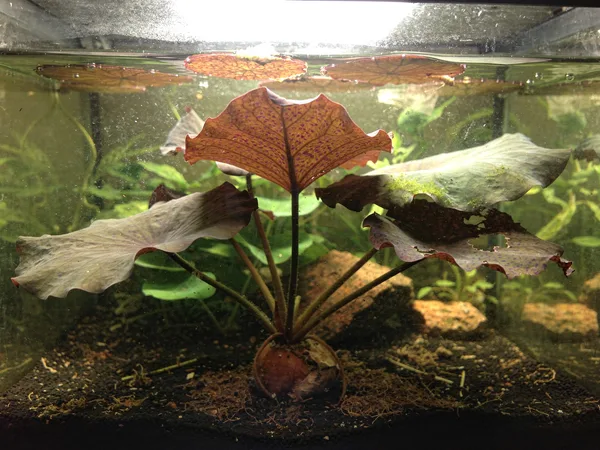
Nymphaea lotus 'grün'
Nymphaeaceae
Nymphaea lotus
The green-leaved form of the tiger lotus: the underwater leaves are green with dark spots or streaks, while in the 'rot' form they are red. Often in the trade, and easy to get from other aquarists too.
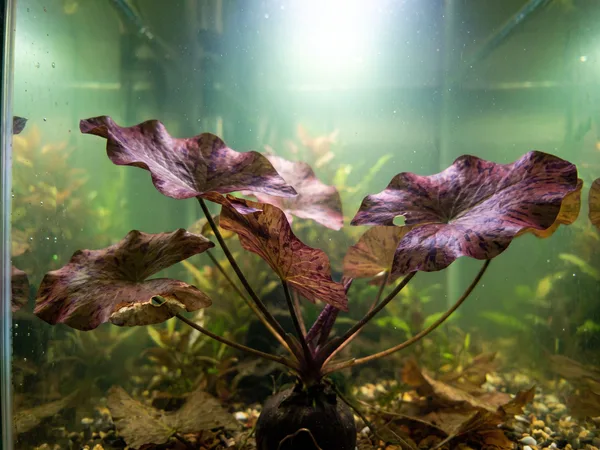
Nymphaea lotus 'rot'
Nymphaeaceae
Nymphaea lotus
The red tiger lotus is the most popular water lily in the hobby: red underwater leaves with dark spots or stripes. The 'green' form is a related green-leaved form with the same dark spots.
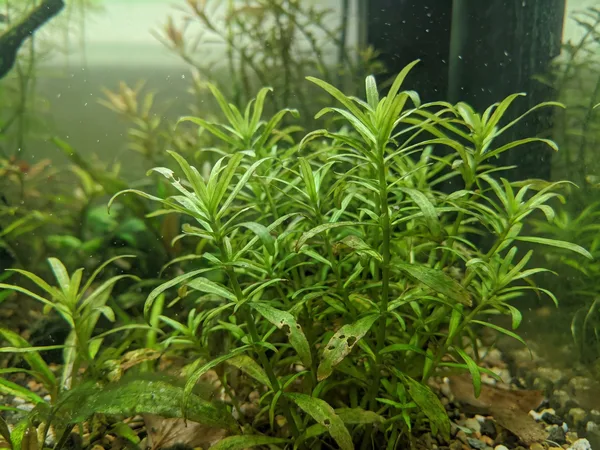
Octopus Pogostemon
Lamiaceae
Pogostemon quadrifolius
Long narrow leaves in loose whorls that curl outward like tentacles — hence the nickname. A close relative of the star pogostemon, and far simpler to grow.
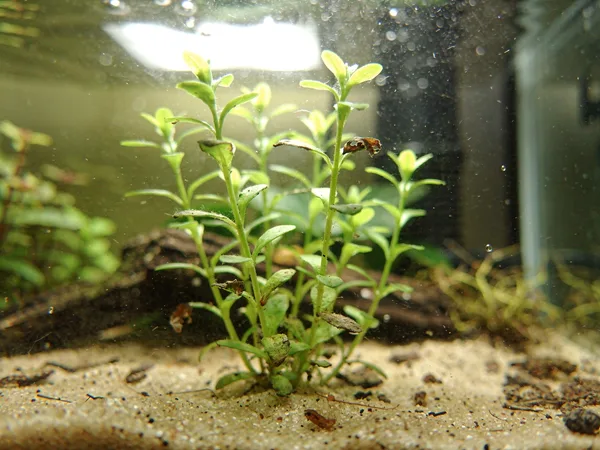
Oldenlandia
Rubiaceae
Oldenlandia salzmannii
A simple green stem plant from South America, close in look to the common bacopa: bright stalks with small paired leaves. Undemanding, quick, and still rare in shops.
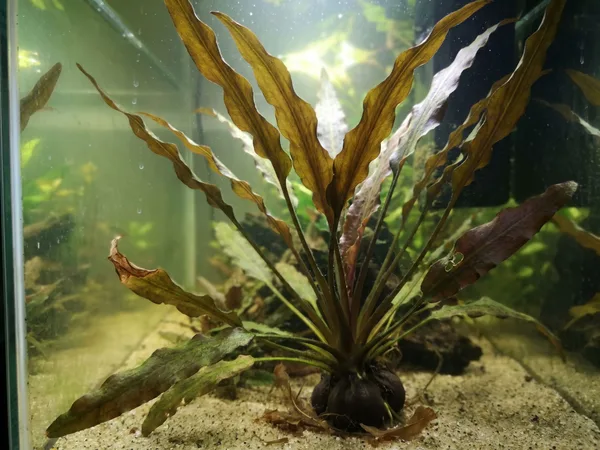
Orchid Lily
Nymphaeaceae
Barclaya longifolia
A bulb plant with long wine-red leaves that shimmer as the light moves. One of the most striking centrepieces in the hobby, and one that dislikes being disturbed.
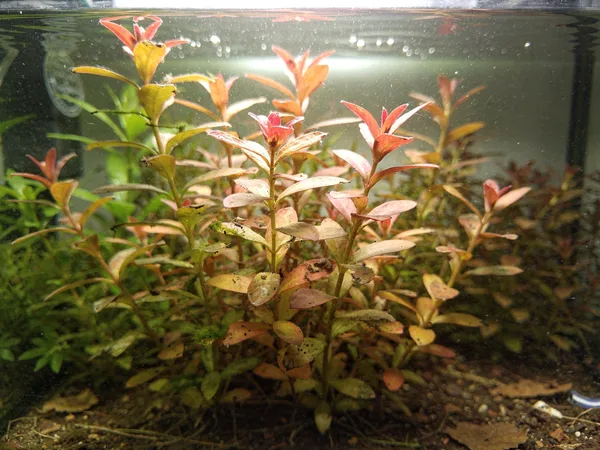
Oval Ludwigia
Onagraceae
Ludwigia ovalis
Rounded leaves running through gold, orange and pink as the light gets stronger. Unlike other ludwigias its leaves sit singly along the stem, which gives the group a lighter look.
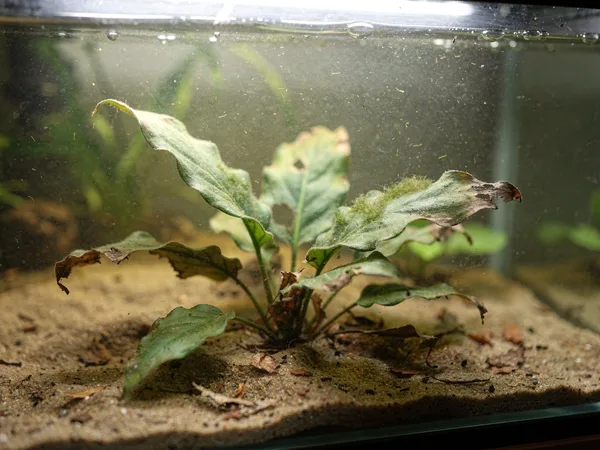
Palawan Crypt
Araceae
Cryptocoryne palawanensis
A small water trumpet from the Philippine islands of Palawan and Busuanga, long mistaken for another dwarf species. It is kept exactly like the familiar Sri Lankan crypts.
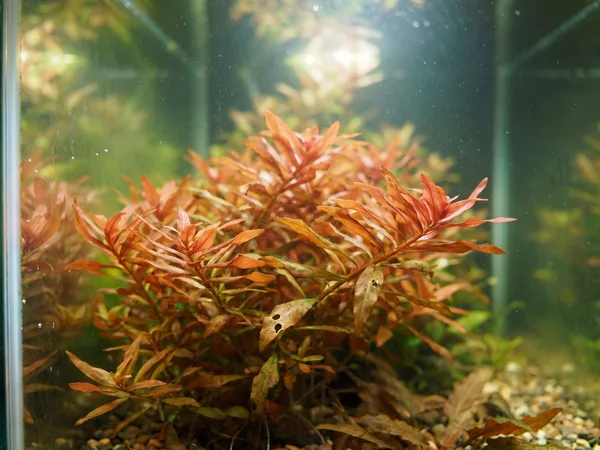
Pantanal Ludwigia
Onagraceae
Ludwigia inclinata
Fine orange-red leaves radiating from the stem in wheels. One of the most beautiful red plants in the hobby, and one that tells you immediately when anything is wrong.
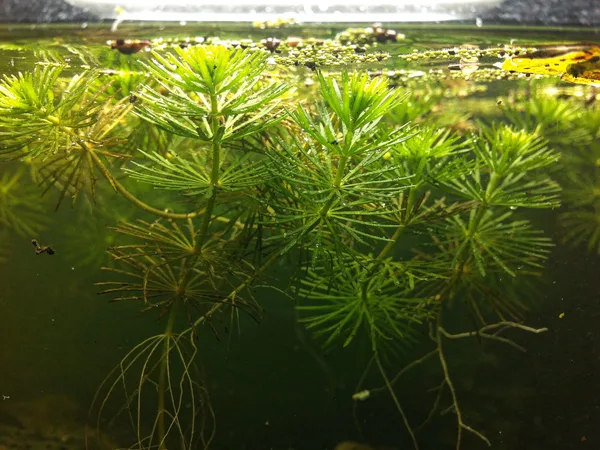
Parrot's Feather
Haloragaceae
Myriophyllum aquaticum
Feathery whorls of finely divided leaves on a fast stem — the classic soft green backdrop. It grows quickly and eats up the nutrients that algae would otherwise take.
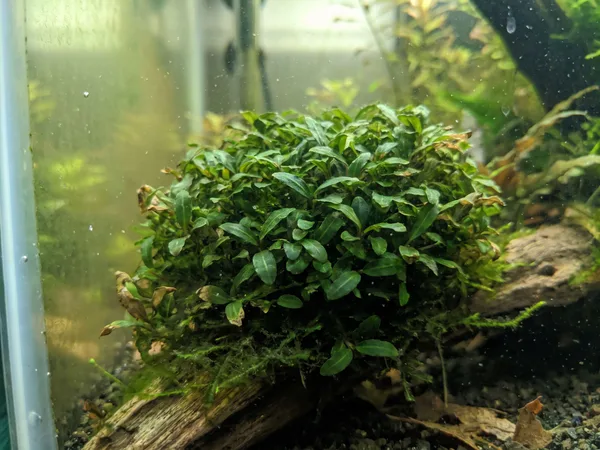
Pearl Moss
Mniaceae
Plagiomnium affine
One of several mosses sold as pearl moss, and a true moss rather than a liverwort: its rounded leaves have a clear midrib running to the tip, which the liverworts never have.
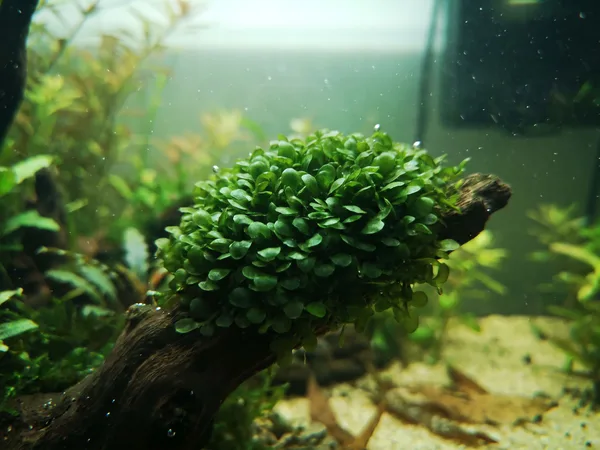
Pearl Moss
Solenostomataceae
Solenostoma tetragonum
A liverwort from Borneo with small round translucent leaves that build a dense dark green cushion. Under good light it holds strings of oxygen bubbles between the leaves — hence the name.
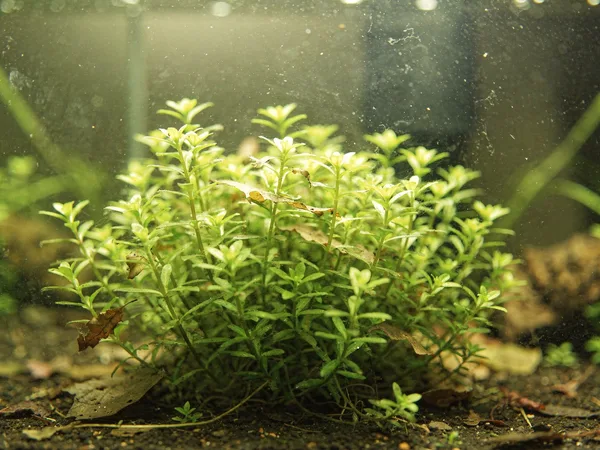
Pearlweed
Linderniaceae
Micranthemum glomeratum
Small arched leaves on thin stems, like a miniature elodea. Under strong light it trails along the bottom and works as a foreground plant; in dim light it climbs.
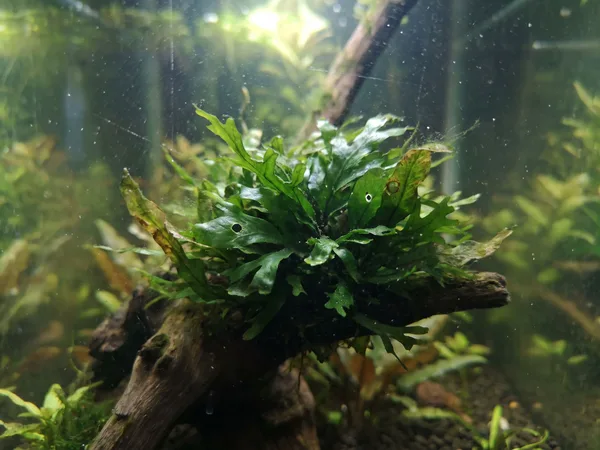
Pellia
Monosoleniaceae
Monosolenium tenerum
A liverwort that looks like a giant riccia which never floats: thick dark green lobes forming cushions on the bottom. Undemanding once it is anchored — and brittle until then.
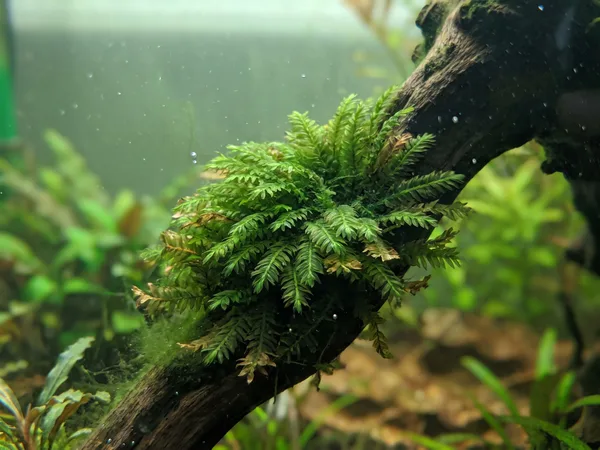
Phoenix Moss
Fissidentaceae
Fissidens fontanus
A dense deep green moss whose shoots look like little feathers. It grows downward as readily as sideways, so a stone covered in it looks like it is dripping green.
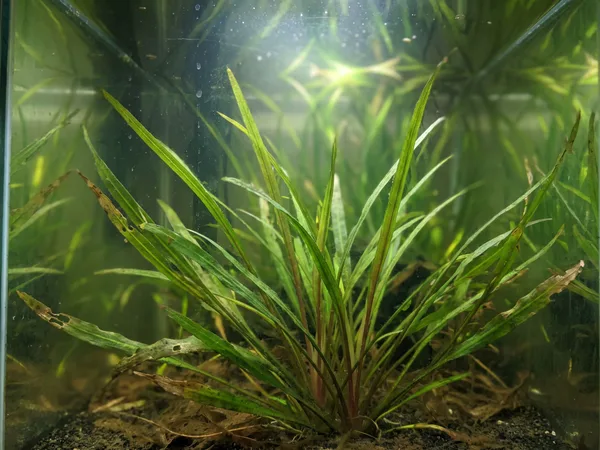
Piauí Sword
Alismataceae
Aquarius decumbens
A tall sword plant with very narrow, long-stalked leaves, found in a single river in eastern Brazil. Its airy shape lets you see the background through it, which few large plants allow.
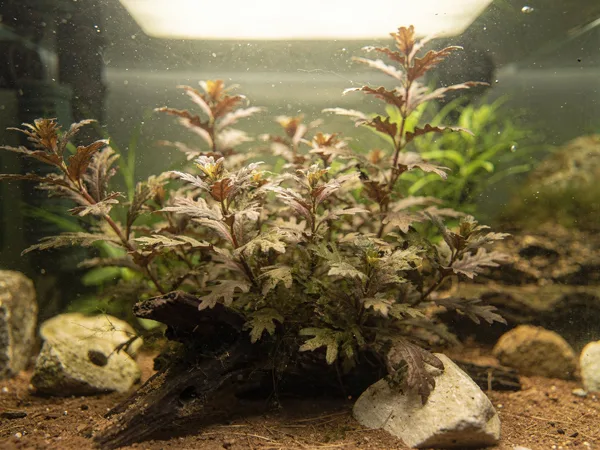
Pinnate Hygrophila
Acanthaceae
Hygrophila pinnatifida
An unusual plant with deeply cut brown-olive leaves and a wine-red underside. It is the rare stem plant that grows tied to wood or stone as well as in the substrate.
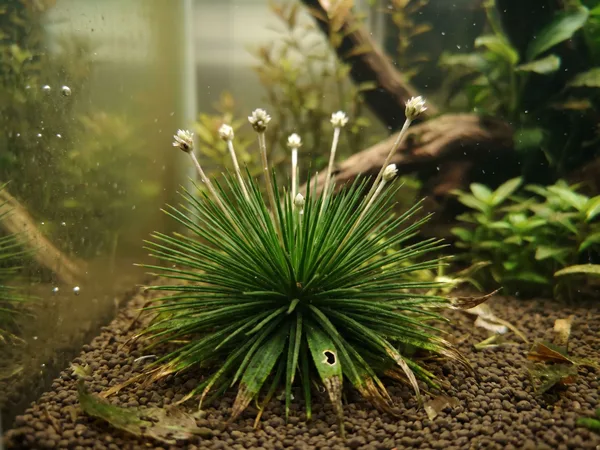
Pipewort
Eriocaulaceae
Eriocaulon cinereum
A small cushion of very narrow leaves that flowers readily under water, sending up a crowd of thin stalks. Rare, striking and genuinely hard to keep.
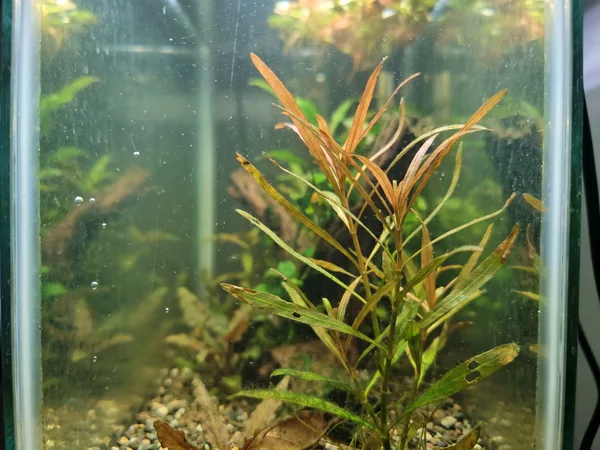
Pondweed
Potamogetonaceae
Potamogeton gayi
Thin soft stems with narrow leaves, green to orange-brown depending on the light. It spreads by runners across the substrate and grows fast in almost any water.
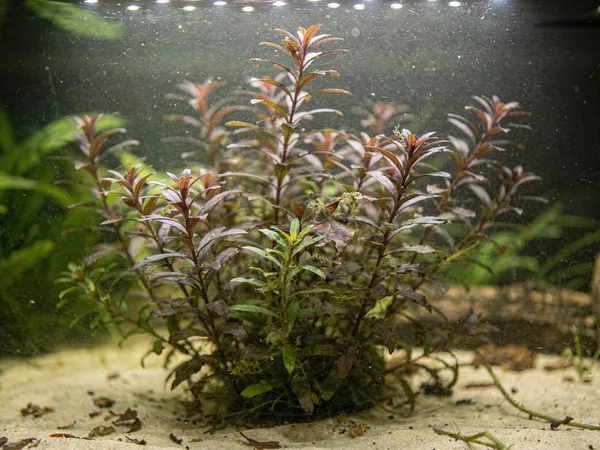
Purple Ambulia
Plantaginaceae
Limnophila hippuridoides
Narrow leaves in whorls, green above and red-violet underneath — the whole plant turns violet when conditions suit it. Simple to grow and adaptable.
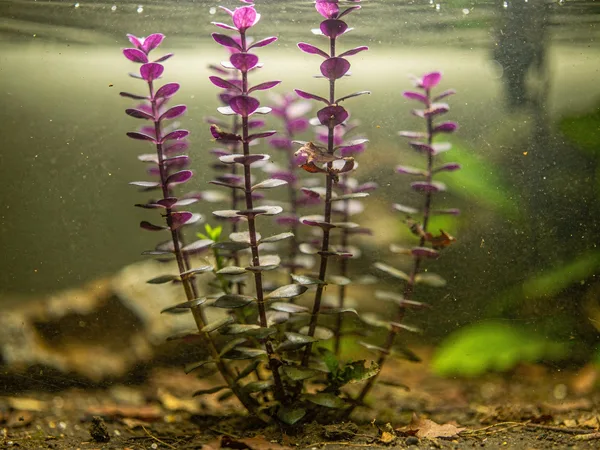
Purple Bacopa
Plantaginaceae
Bacopa salzmannii
The one bacopa that is not green: rounded, slightly fleshy leaves in purple and magenta on a straight stem. Colour that does not require a high-tech tank.
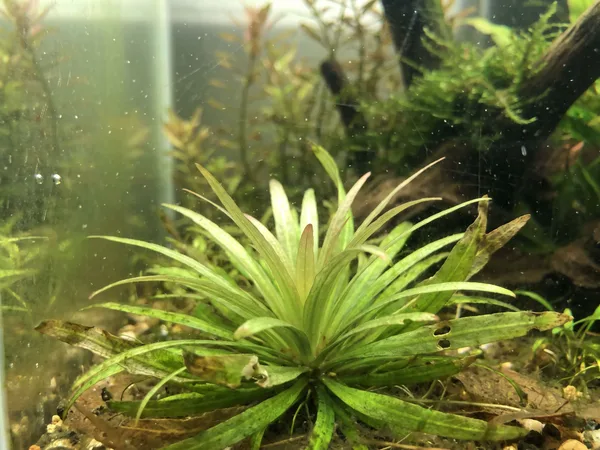
Pygmy Chain Sword
Alismataceae
Helanthium tenellum
A small grass-like rosette that spreads by runners into a low green carpet. One of the few carpets that manage without carbon dioxide, though it does want light reaching the bottom.
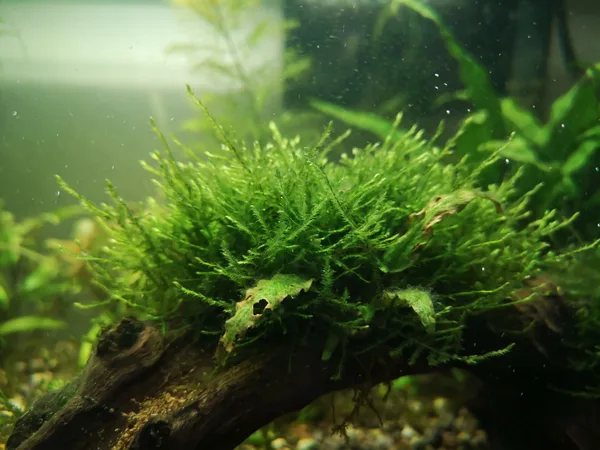
Queen Moss
Sematophyllaceae
Hydropogonella gymnostoma
One of the very few aquarium mosses from South America, collected around Manaus and identified only in 2013. Still uncommon, and quietly beautiful.
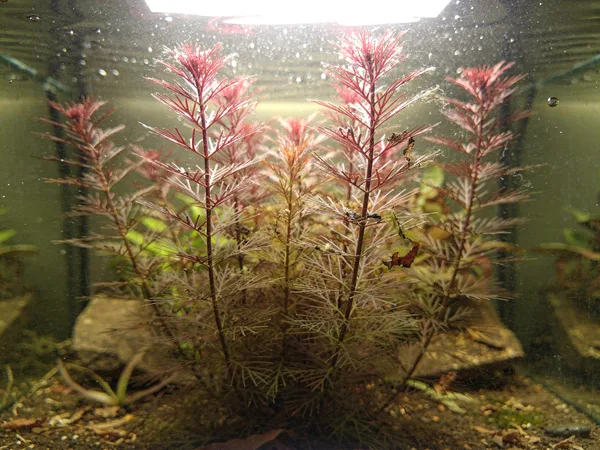
Red Cabomba
Cabombaceae
Cabomba furcata
Feathery whorls of needle-thin leaves in crimson and wine red — like small red pines standing in the substrate. The most beautiful cabomba and the hardest one to keep.
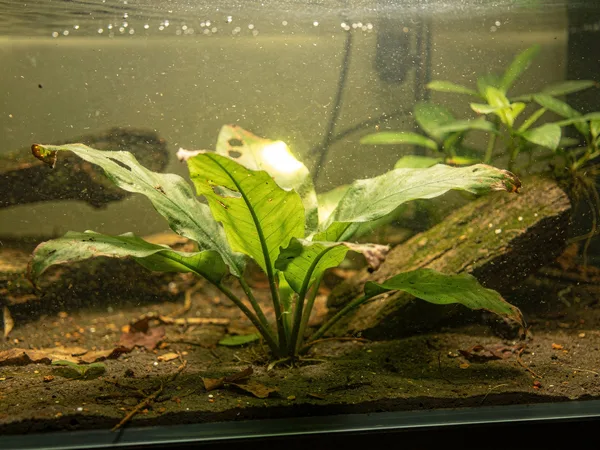
Red Lagenandra
Araceae
Lagenandra meeboldii
Broad oval leaves in dusty green, violet and red-violet, often all on the same leaf; new leaves come up pale pink. Kept exactly like a water trumpet, but the colour is its own.
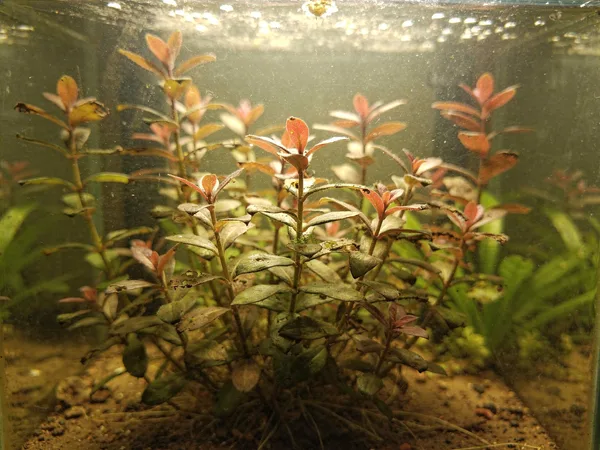
Red Ludwigia
Onagraceae
Ludwigia repens
The easiest red plant in the hobby: it turns copper and deep red under decent light without carbon dioxide, which most red plants refuse to do. A group of it is the simplest way to break up an all-green tank.
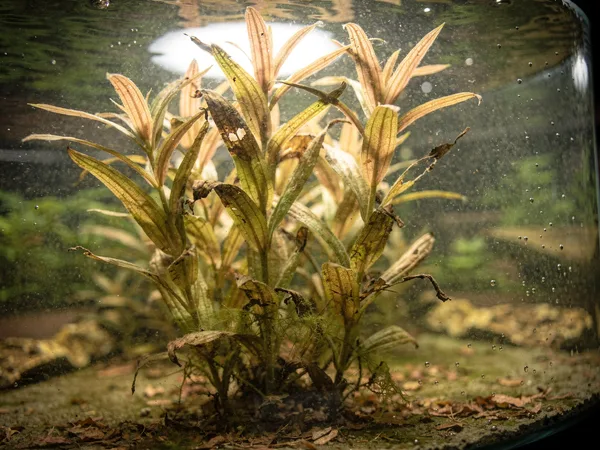
Red Murdannia
Commelinaceae
Murdannia engelsii
Thin, strongly waved, half-transparent leaves in greenish yellow through brown-red to pink, with darker veins running across them like marbling. Described as a species only in 2016.
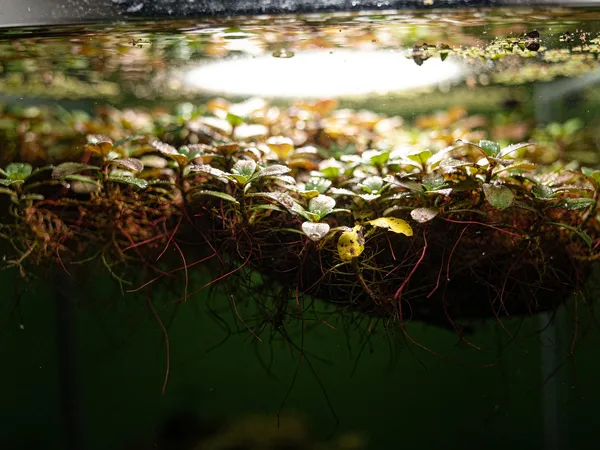
Red Root Floater
Phyllanthaceae
Phyllanthus fluitans
A floating plant with heart-shaped leaves and crimson roots hanging beneath. Under strong light the leaves themselves turn red — the only floater in the catalogue that does that.
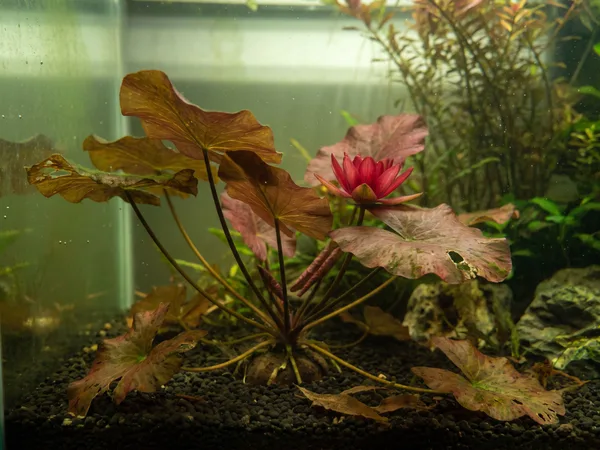
Red Water Lily
Nymphaeaceae
Nymphaea rubra
A tropical water lily from India with red night-opening flowers. Grown from a tuber, it is quick and undemanding, and in an aquarium it is kept for its leaves rather than its blooms.
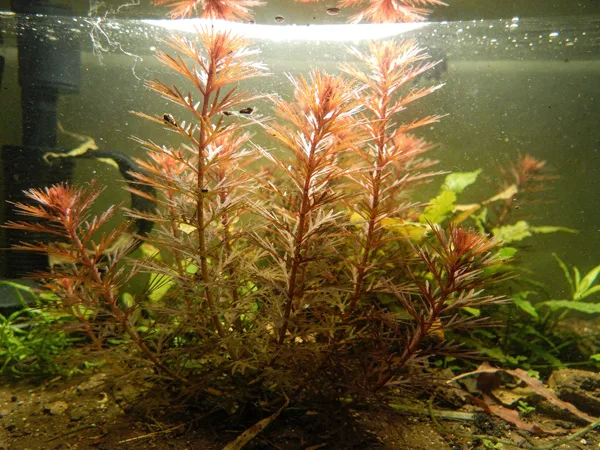
Red Watermilfoil
Haloragaceae
Myriophyllum tuberculatum
Red and orange needles arranged like the branches of a small conifer. Striking, and one of the hungriest plants in the hobby.
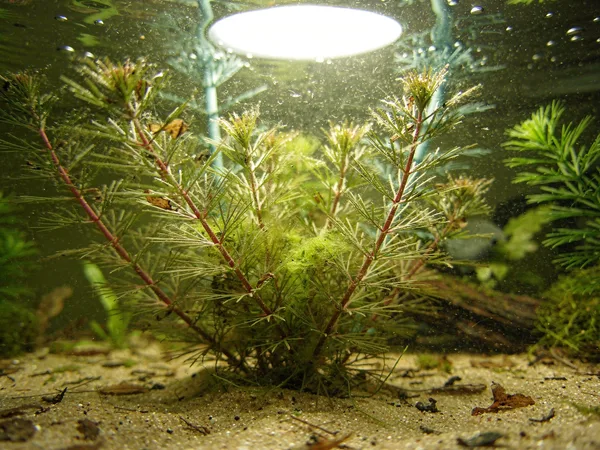
Red-stem Parrot's Feather
Haloragaceae
Myriophyllum rubricaule
The parrot's feather with red stems, sold for decades as a pond plant before anyone settled what it was. Known only from cultivation, and very fast in a tank.
Rice Paddy Herb
Plantaginaceae
Limnophila aromatica
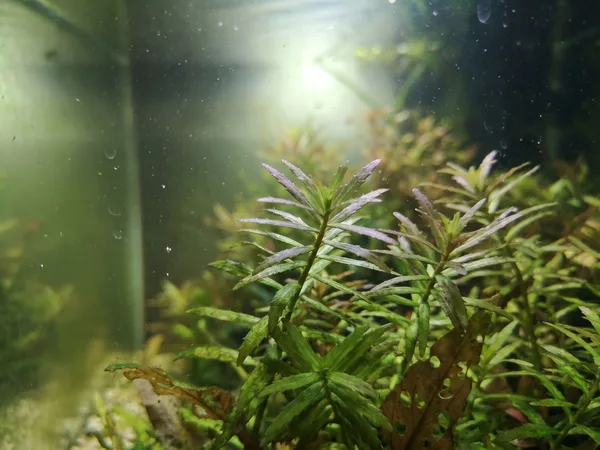
A stem plant from flooded rice fields with star-shaped whorls of narrow leaves and a purple underside. In bright light it turns pink and magenta; in dim light it stays a plain olive green.
River Buttercup
Ranunculaceae
Ranunculus inundatus
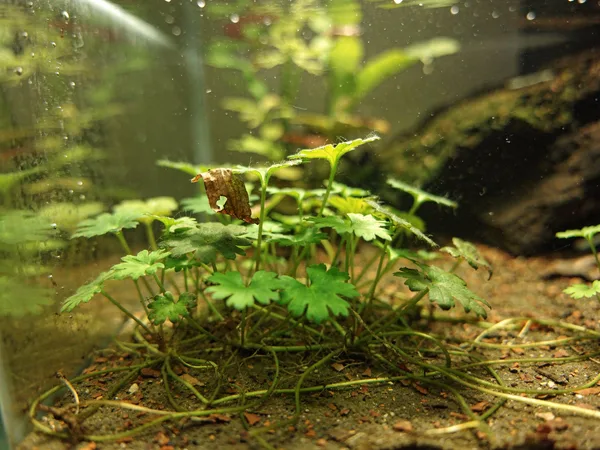
Leaves cut into narrow fingers on upright stalks, like a stand of tiny green umbrellas. Unlike most carpets it grows in height as well as width, and looks like nothing else in a tank.
Robinson's Aponogeton
Aponogetonaceae
Aponogeton robinsonii
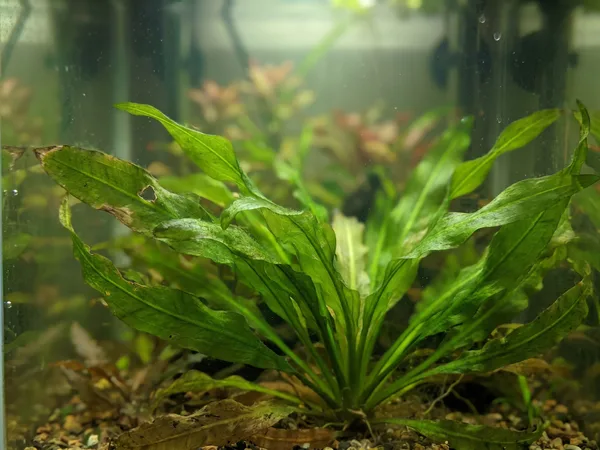
A bulb plant from the slow, very soft rivers of Vietnam and Laos. Two rather different plants travel under this name: one makes floating leaves, the other long wavy ribbons under water.
Rotala macrandra 'Butterfly'
Lythraceae
Rotala macrandra
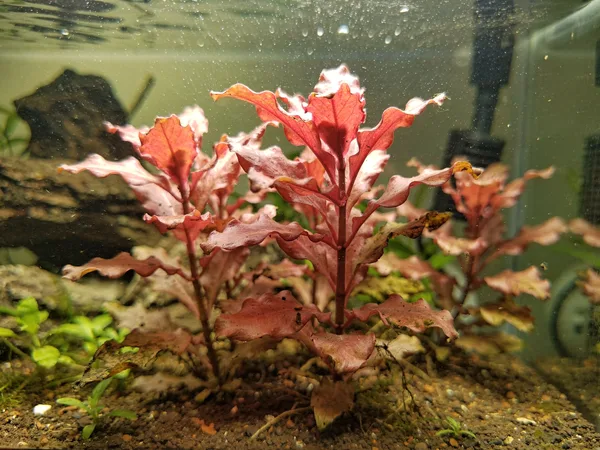
A small form of the giant red rotala, also known as 'Mini Type V'; the trade also carries the similar name 'Mini Butterfly', but whether these are the same plant has not been established.
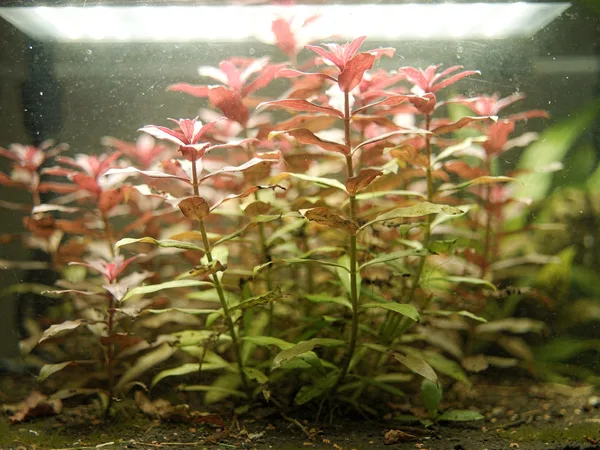
Rotala macrandra 'Green Narrow Leaf'
Lythraceae
Rotala macrandra
A narrow-leaved green form of the giant red rotala: the leaves are elongated, narrower and longer than in the similar Rotala rotundifolia, and sit strictly in pairs. It grows fast and adapts easily to underwater life.
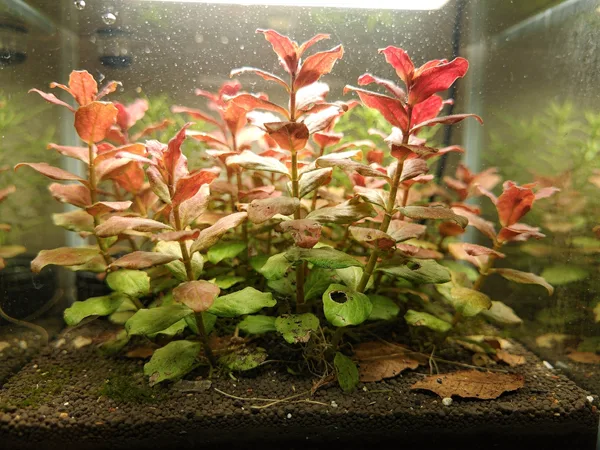
Rotala macrandra 'Green'
Lythraceae
Rotala macrandra
A relatively small green cultivar of the giant red rotala that changes its look depending on light: under moderate light the leaves are elongated and light green, under intense light they redden and can become…
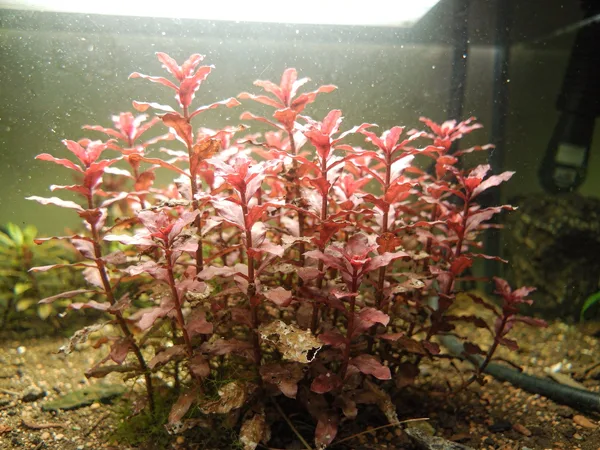
Rotala macrandra 'Mini Type 2'
Lythraceae
Rotala macrandra
A very fine-leaved, delicate form of the giant red rotala: the leaves are elongated-oval with a raised centre and upturned edges, or rounded-oval. Underwater the plant looks like a terrestrial one.
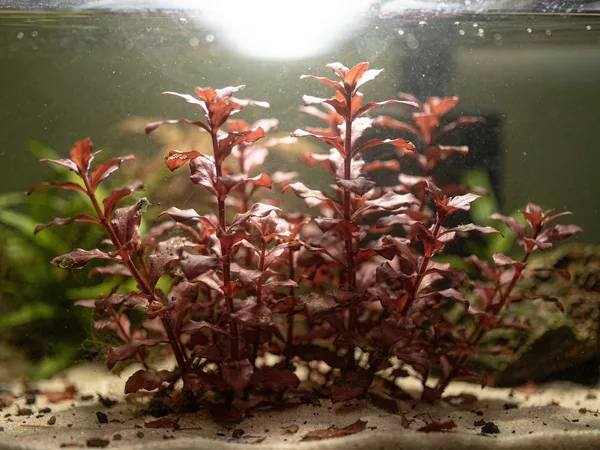
Rotala macrandra 'Mini Type 4'
Lythraceae
Rotala macrandra
A fine-leaved, delicate red form of the giant red rotala with elongated-oval to round leaves. It looks like a miniature version of the long-known broad-leaved standard macrandra.
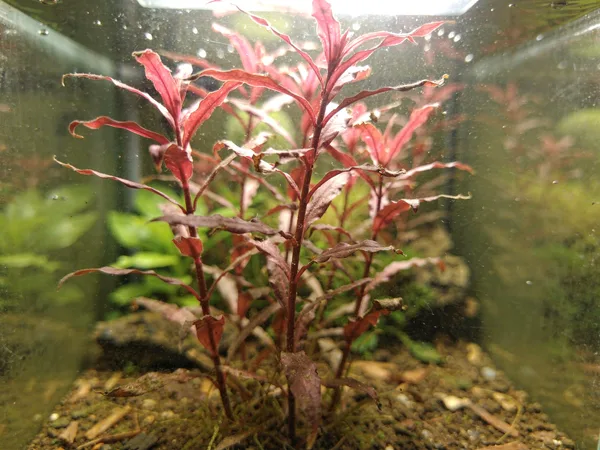
Rotala macrandra 'Narrow Leaf'
Lythraceae
Rotala macrandra
A very narrow-leaved mutation of the giant red rotala, one of the best-selling rotalas in the US; also known under the trade names Rotala 'Magenta' and R. macrandra 'Florida'.
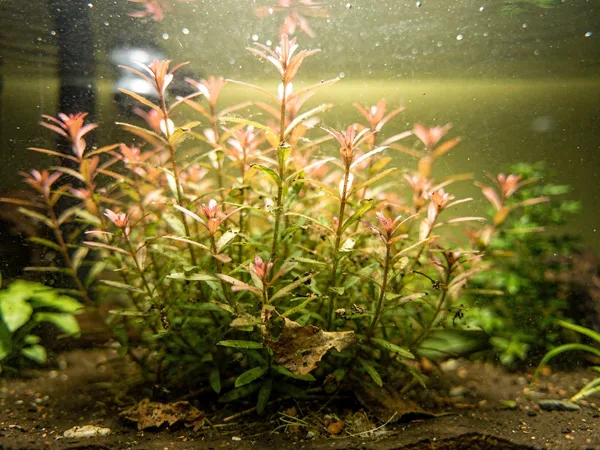
Rotala rotundifolia 'Ceylon'
Lythraceae
Rotala rotundifolia
A form of Rotala rotundifolia introduced from Sri Lanka (the island's old name was Ceylon); its stems grow loosely upward rather than strictly vertical like the 'ordinary' rotala, and its internodes are longer.
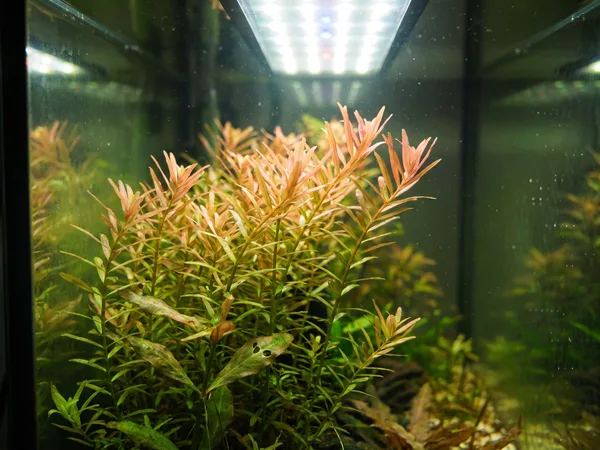
Rotala rotundifolia 'Colorata'
Lythraceae
Rotala rotundifolia
A form of Rotala rotundifolia that turns red already under moderate light, and under strong light gives a rich red colour with orange to pink tones; slightly prone to trailing growth, a trait even more pronounced in the…
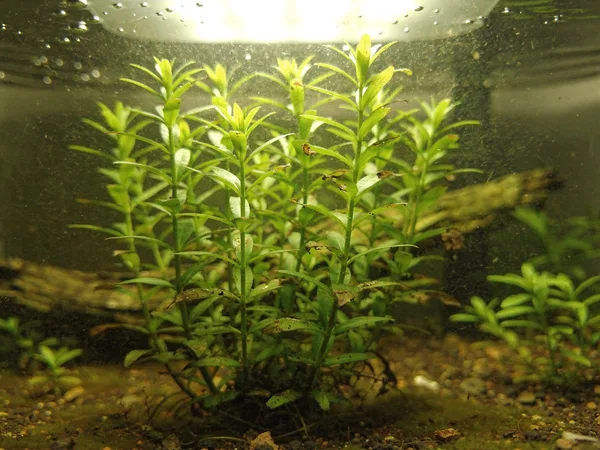
Rotala rotundifolia 'Green'
Lythraceae
Rotala rotundifolia
A form of Rotala rotundifolia with a plain green colour of the stem and leaves underwater, without the reddish tinge of related forms; shoots first grow straight, then curve downward in an arc.
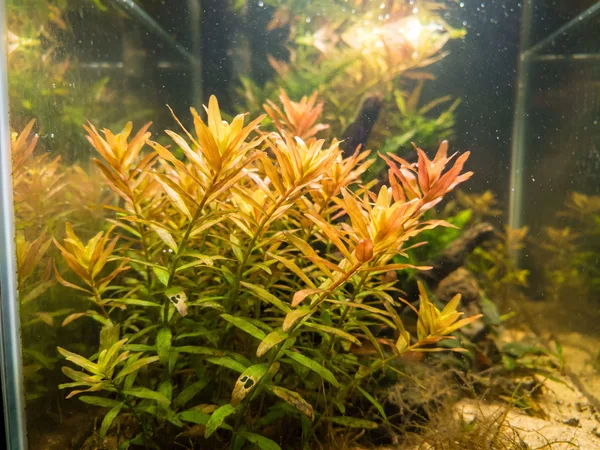
Rotala rotundifolia 'H'Ra' ('Gia Lai')
Lythraceae
Rotala rotundifolia
A cultivar of Rotala rotundifolia with a creeping, trailing growth habit and orange-red colour underwater; very close to 'Colorata', but its leaves are a little narrower and the shade warmer — orange rather than…
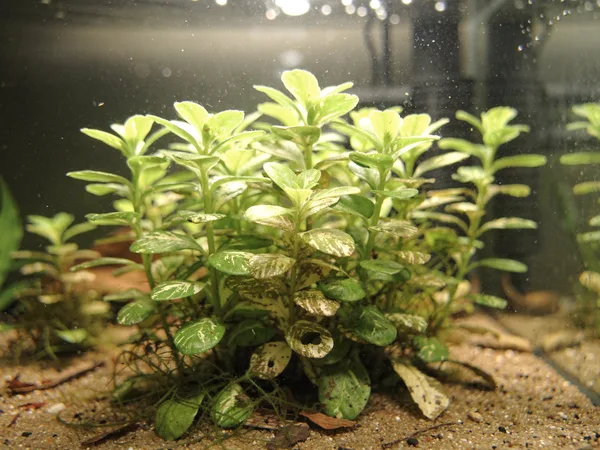
Round-leaf Lindernia
Linderniaceae
Lindernia rotundifolia
Bright green round leaves set close along an upright stem. A quick, forgiving plant that grows in dim light and takes up nitrate as fast as it grows.
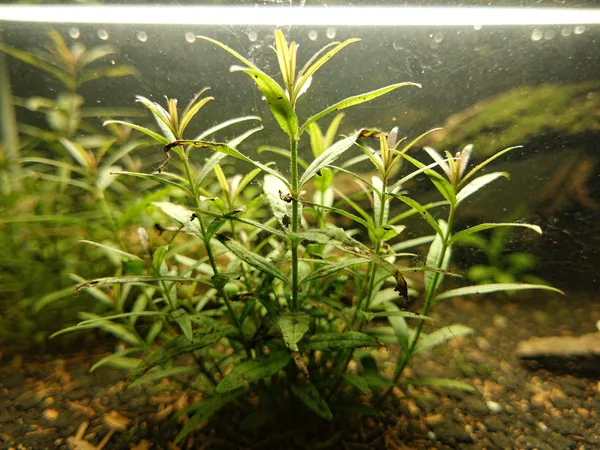
Ruby Smartweed
Polygonaceae
Persicaria praetermissa
Narrow arrow-shaped leaves that go copper, red-brown and magenta once the plant is under water. Above water it is plain green — the colour is the reward for submerging it.
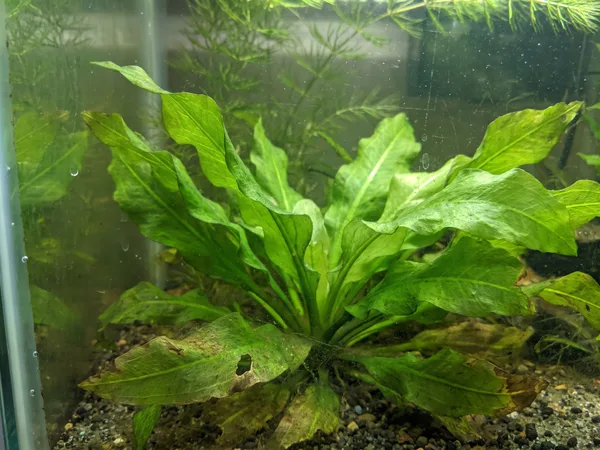
Ruffle Sword
Alismataceae
Aquarius major
Long thick leaves with strongly waved edges and clear veining — an old favourite for the back of a big tank, and simple enough for a first one.
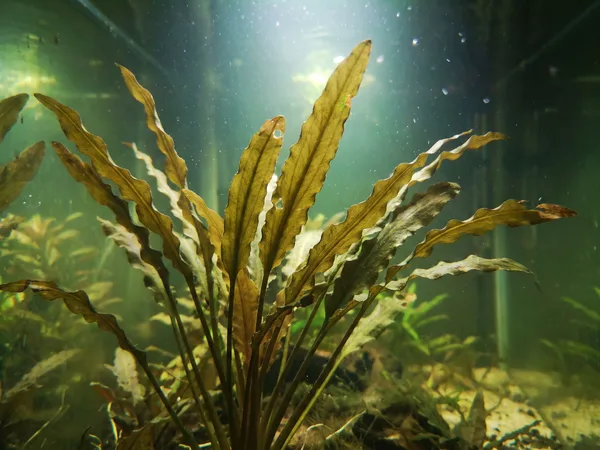
Ruffled Aponogeton
Aponogetonaceae
Aponogeton longiplumulosus
A bulb plant from Madagascar with long olive leaves whose edges are deeply waved. Big, undemanding and happy in almost any water.
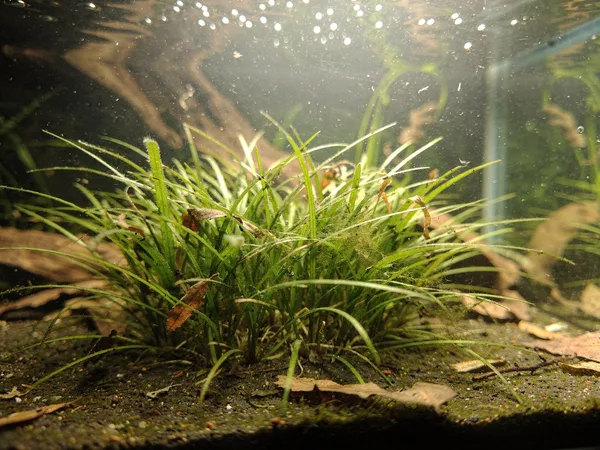
Sagittaria subulata 'Needle'
Alismataceae
Sagittaria subulata
A form of Sagittaria subulata with very narrow, needle-like leaves, often no longer than 10 cm and only 1.5–2 mm wide; in Austria and Germany it is known accordingly as 'needle sagittaria'.
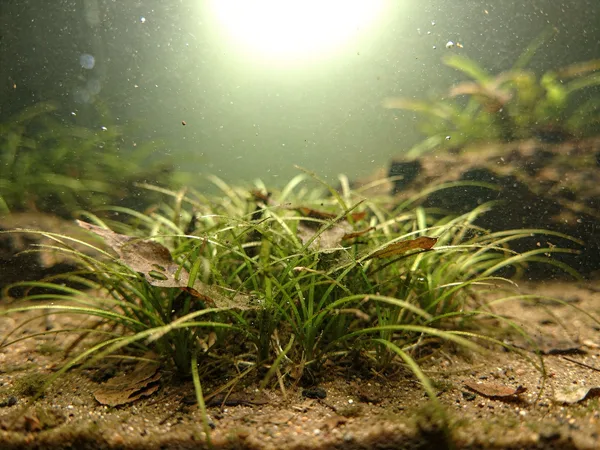
Sagittaria subulata 'Pusilla'
Alismataceae
Sagittaria subulata
A dwarf form of Sagittaria subulata that, under equal conditions, stays lower than the ordinary species; under the same name 'Pusilla' or var. pusilla, however, ordinary, non-dwarfing plants are often sold as well.
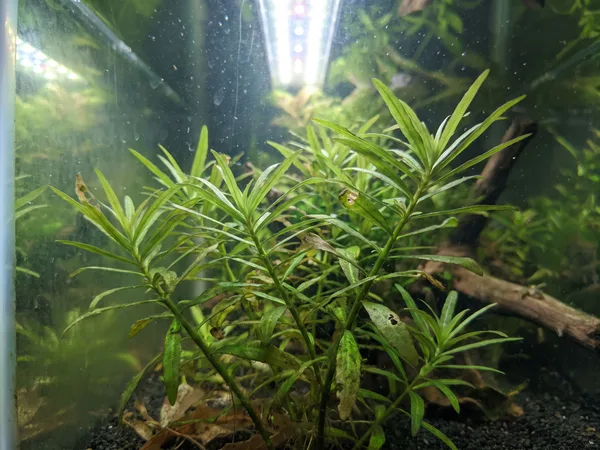
Sampson's Pogostemon
Lamiaceae
Pogostemon sampsonii
Thin pointed leaves radiating from a straight stem. Grown as a thick bush at the back of the tank it draws the eye, and it takes trimming better than most.
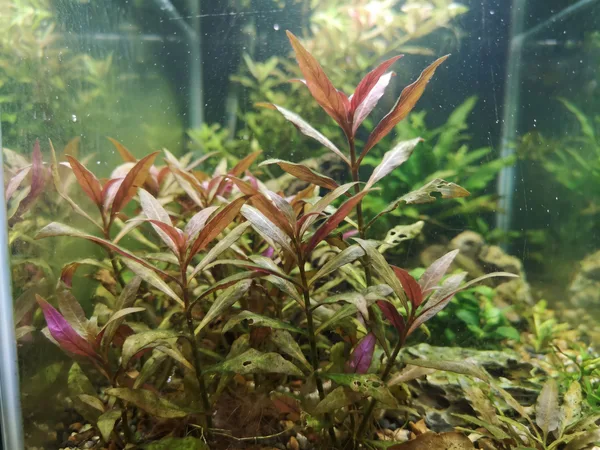
Scarlet Temple
Amaranthaceae
Alternanthera reineckii
The red plant of the hobby: leaves from pink to deep wine, on stems that stay upright without help. It asks for good light to hold that colour, and that is the one thing it will not do without.
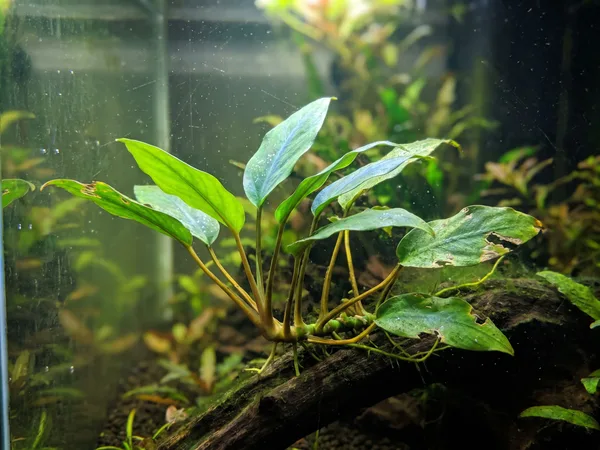
Schismatoglottis
Araceae
Schismatoglottis roseospatha
A rock-dwelling plant from Bornean waterfalls, kept like an anubias: tied to wood or stone, never buried. Narrow bright leaves with pale speckles and a faint blue cast.
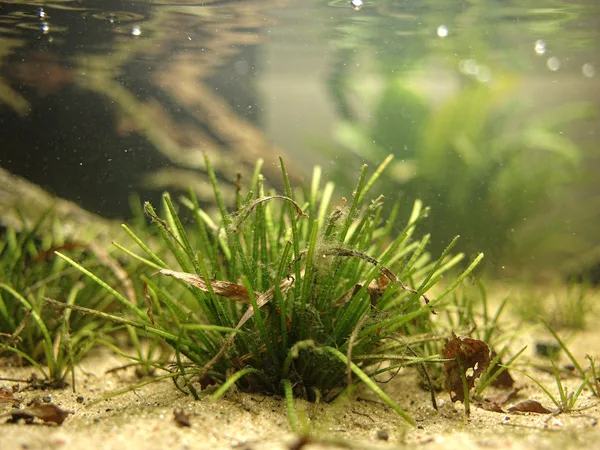
Shoreweed
Plantaginaceae
Littorella uniflora
A lawn of short, fat, fleshy leaves — closer to a succulent than to grass. It grows in cool water and dim light, very slowly, and looks like nothing else on the bottom of a tank.
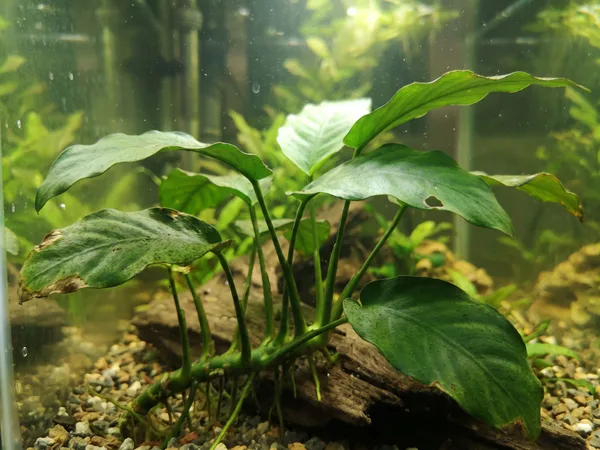
Slender Anubias
Araceae
Anubias gracilis
The most elegant of the anubias: triangular leaves held on long stalks, well clear of the wood they grow on. Tough, slow and almost impossible to kill.
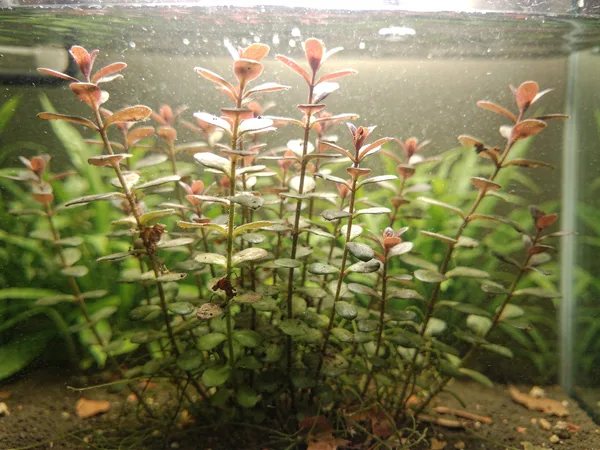
Southern Bacopa
Plantaginaceae
Bacopa australis
A small bacopa from southern Brazil with round bright-green leaves. It grows upright or creeps along the bottom into a low cushion, whichever the light asks for.
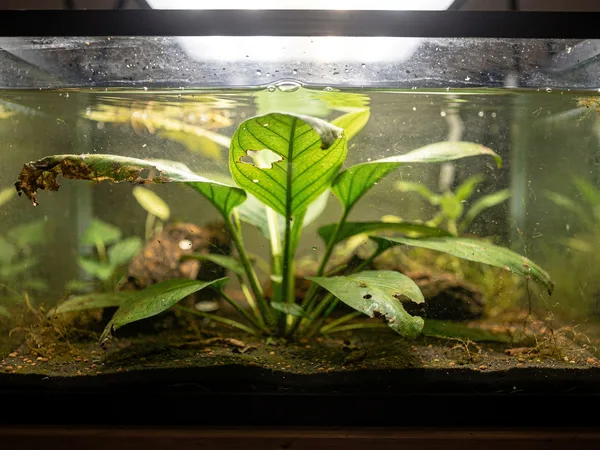
Spade-leaf Sword
Alismataceae
Aquarius cordifolius
A big sword plant with wide, wavy, light green leaves. Fast for its size, undemanding, and one of the classic centrepieces for a large tank.
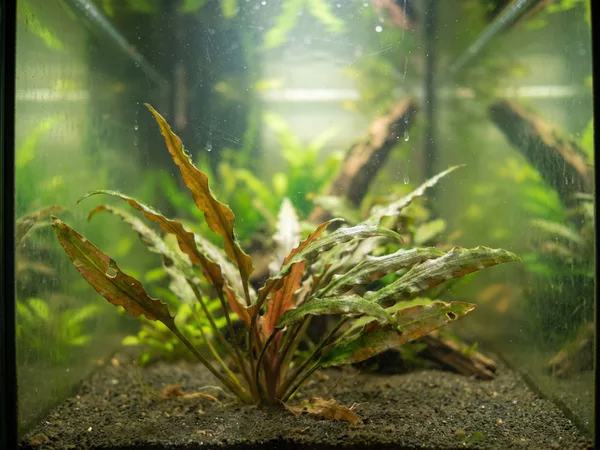
Spiral Water Trumpet
Araceae
Cryptocoryne spiralis
A crypt with long, narrow, slightly twisted leaves that sway like ribbons in the current. It grows tall enough for a background, which is unusual in this genus.
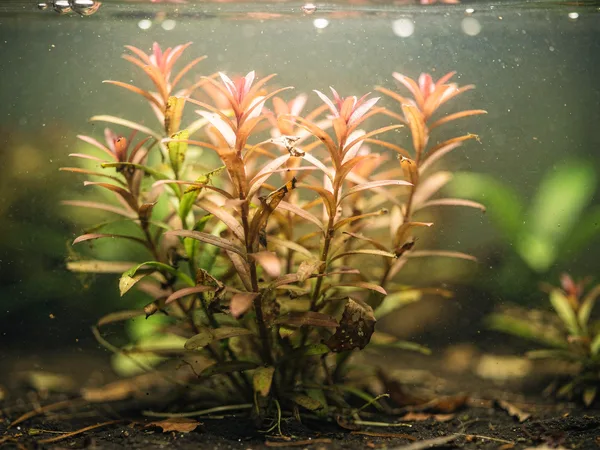
Star Pogostemon
Lamiaceae
Pogostemon stellatus
Narrow pointed leaves in dense whorls that turn orange, pink and red under strong light — one of the showiest background plants there is, and one of the least forgiving.