Aquarium plants
Page 3 of 5
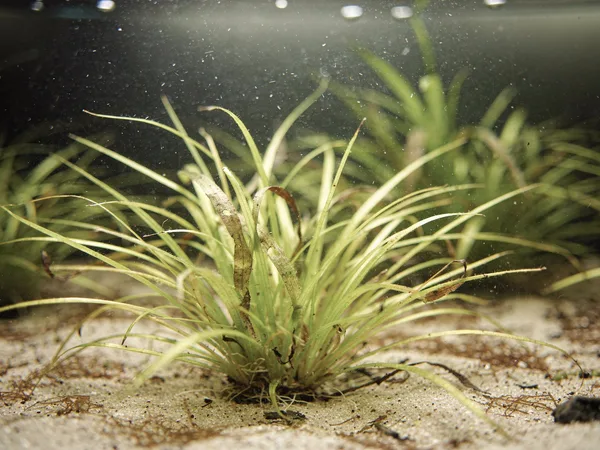
Helanthium bolivianum 'Angustifolius'
Alismataceae
Helanthium bolivianum
A ribbon-leaved form of the Bolivian chain sword, better known as Echinodorus angustifolius: underwater the leaves grow up to 50, sometimes over 60 cm long. It resembles Vallisneria nana in appearance.
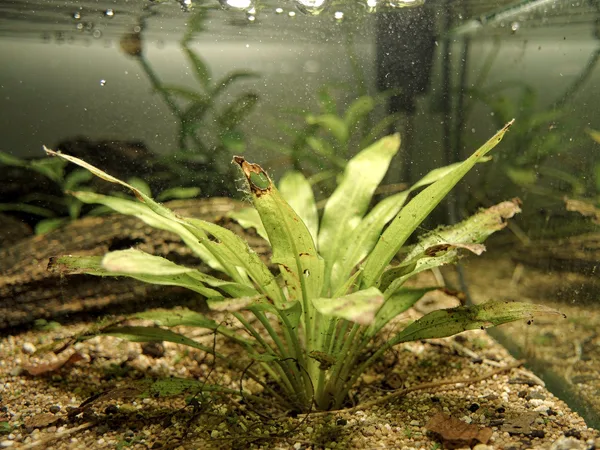
Helanthium bolivianum 'latifolius'
Alismataceae
Helanthium bolivianum
A form of the Bolivian chain sword long known as Echinodorus latifolius; underwater it is almost indistinguishable from the neighbouring forms of the group, its rosettes looking slightly stiffer than in the…
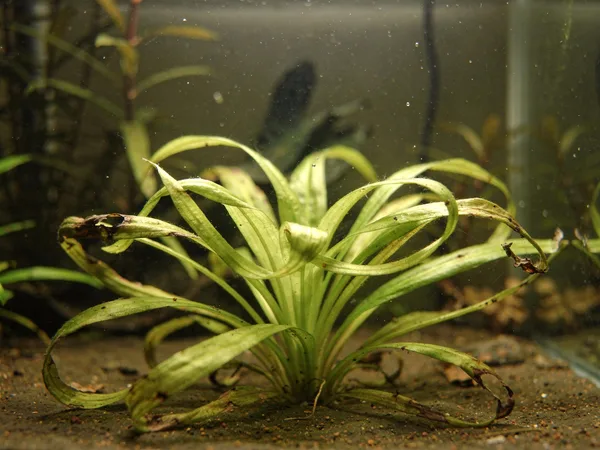
Helanthium bolivianum 'Vesuvius'
Alismataceae
Helanthium bolivianum
A cultivar of the Bolivian chain sword with leaves twisted like a corkscrew — hence its common names 'corkscrew sword plant' and 'Vesuvius sword plant'. The first cultivar among the runner-forming 'grassy' sword plants.
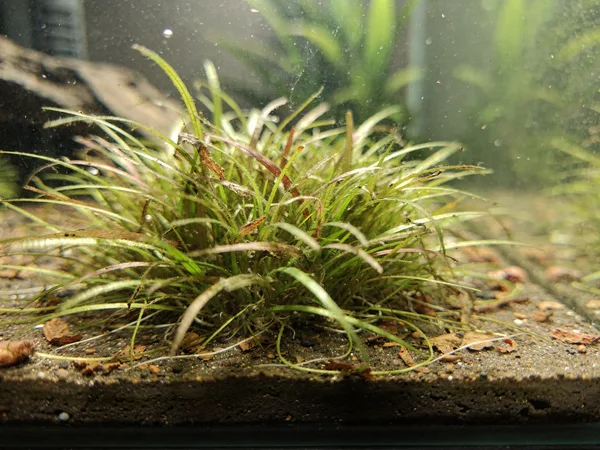
Helanthium tenellum 'parvulum'
Alismataceae
Helanthium tenellum
A light green form of the slender sword plant, probably imported from North America; decades ago it was the form commonly sold under the name Echinodorus tenellus.
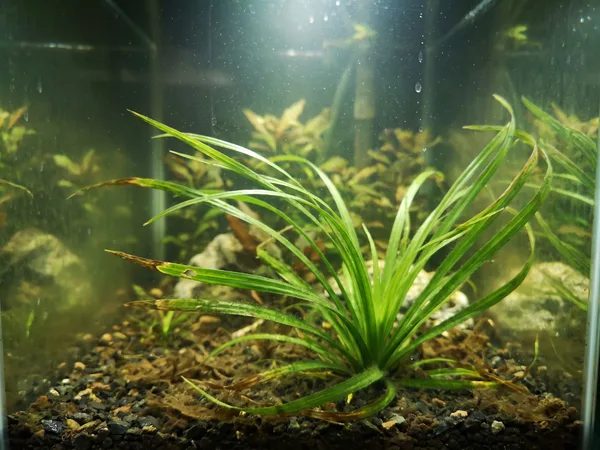
Helfer's Sedge
Cyperaceae
Cyperus helferi
Long grass-like leaves that sway in the current — the closest thing in the hobby to a stand of underwater reeds. One of the very few sedges that live fully submerged.
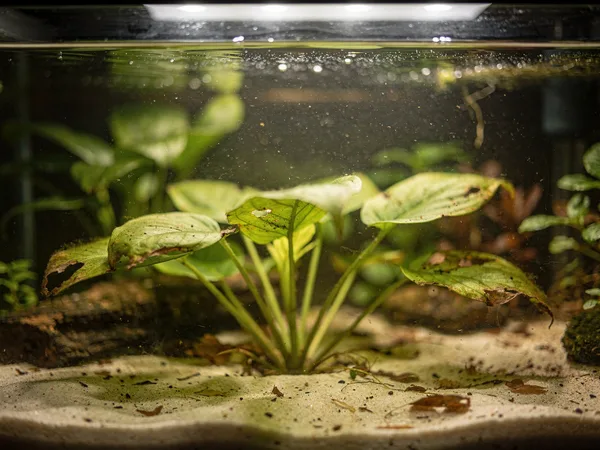
Horizontal Sword
Alismataceae
Aquarius horizontalis
A sword plant that grows outward rather than upward: firm heart-shaped leaves held almost horizontally, so the plant is wider than it is tall. New leaves come up brownish pink and turn green.
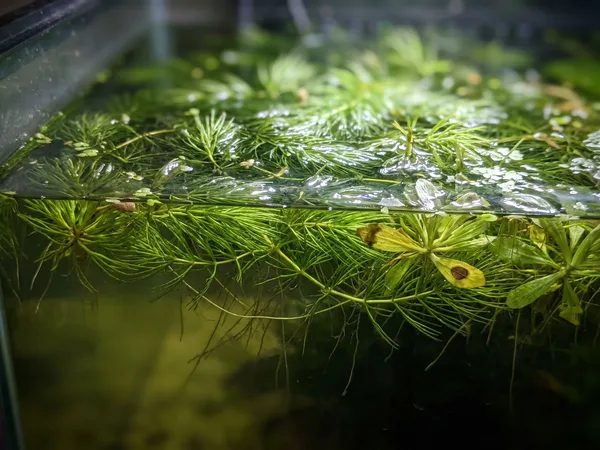
Hornwort
Ceratophyllaceae
Ceratophyllum demersum
A rootless plant that simply floats or is tucked into the substrate, and grows so fast it clears the water of the nutrients algae live on. Common in ponds and lakes across the whole world, and one of the first plants…
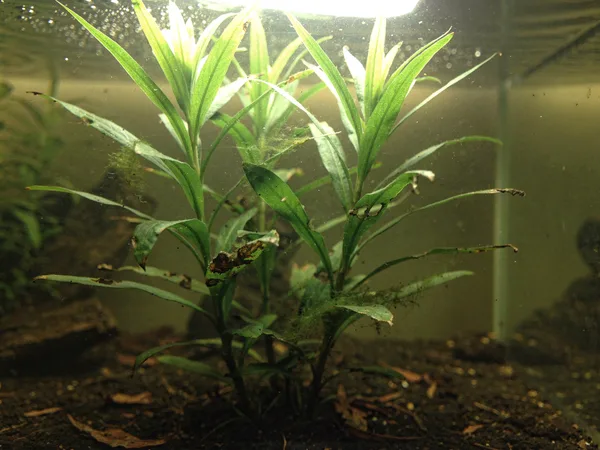
Hygrophila corymbosa ''Angustifolia''
Acanthaceae
Hygrophila corymbosa
The narrow-leaved form of the temple plant (Hygrophila corymbosa): the underwater leaves are light green, up to 20 cm long and only up to 1 cm wide — noticeably longer and narrower than the above-water ones.
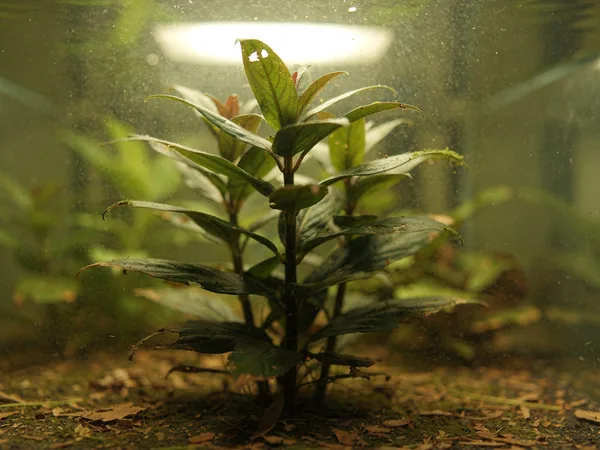
Hygrophila corymbosa 'Kompakt'
Acanthaceae
Hygrophila corymbosa
A compact cultivar of the temple plant (Hygrophila corymbosa) bred in a nursery: very short internodes and many side shoots give a dense, bushy growth only 10–15 cm tall.
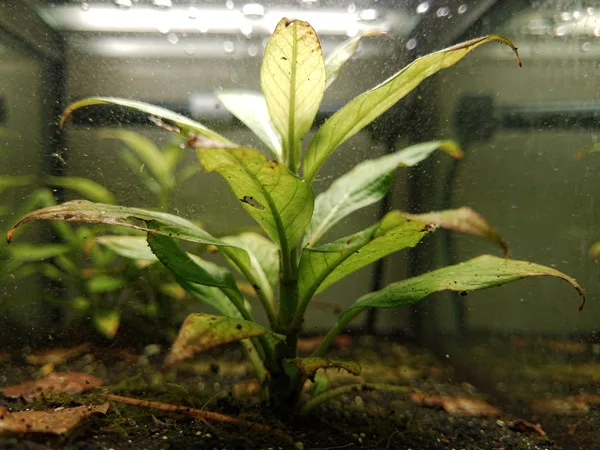
Hygrophila corymbosa 'Siamensis'
Acanthaceae
Hygrophila corymbosa
The 'Thai', or 'Siamese', hygrophila (Hygrophila corymbosa 'Siamensis') is a tough form long known in the hobby: modest requirements for light and nutrients, and a wide range of tolerable water hardness and temperature.
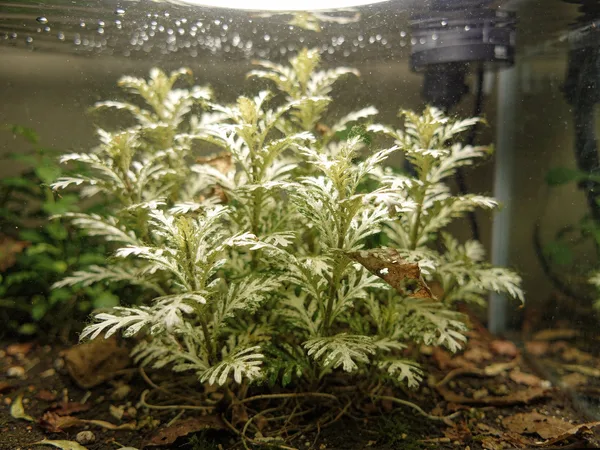
Hygrophila difformis 'Weiß
Acanthaceae
Hygrophila difformis
A variegated white-green form of the water wisteria (Hygrophila difformis 'Weiß-Grün'): part of the veins and areas of the leaf blade lack green pigment and stay white or creamy.
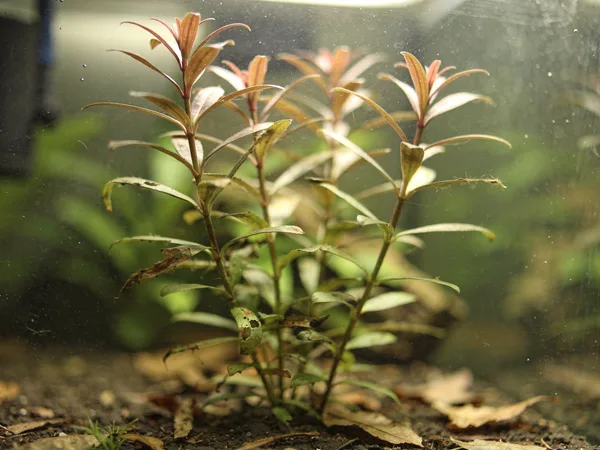
Hygrophila polysperma ''Ceylon''
Acanthaceae
Hygrophila polysperma
A narrow-leaved form of the dwarf hygrophila (Hygrophila polysperma) native to Sri Lanka, in cultivation since 1977; with enough iron the leaves take on a handsome copper tone.
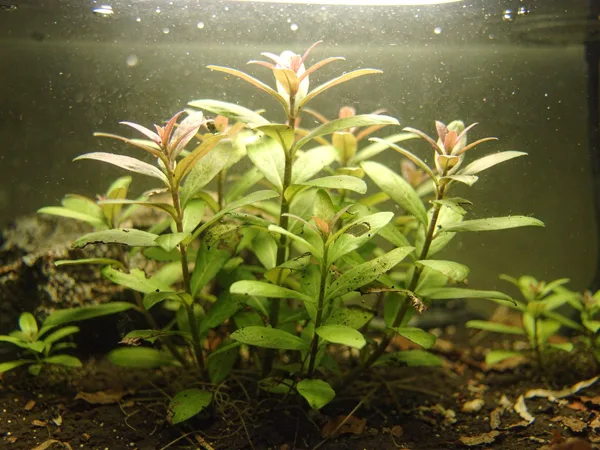
Hygrophila polysperma 'Big leaf'
Acanthaceae
Hygrophila polysperma
A selected form of the dwarf hygrophila (Hygrophila polysperma), sold for years under the label 'Big leaf'; underwater it grows very fast and looks much like the ordinary species, with a brownish tint to the leaves in…
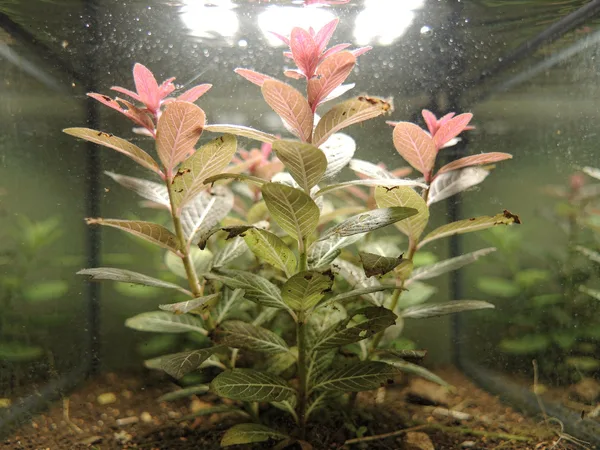
Hygrophila polysperma 'Sunset' ('Rosanervig')
Acanthaceae
Hygrophila polysperma
A nursery-bred cultivar of the dwarf hygrophila (Hygrophila polysperma 'Sunset', 'Rosanervig'): the leaves are often white-veined — not from a nutrient shortage but, as a rule, from a virus that poses no danger to the…
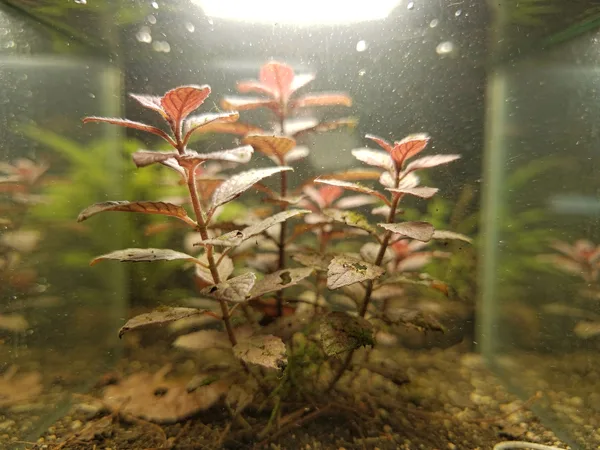
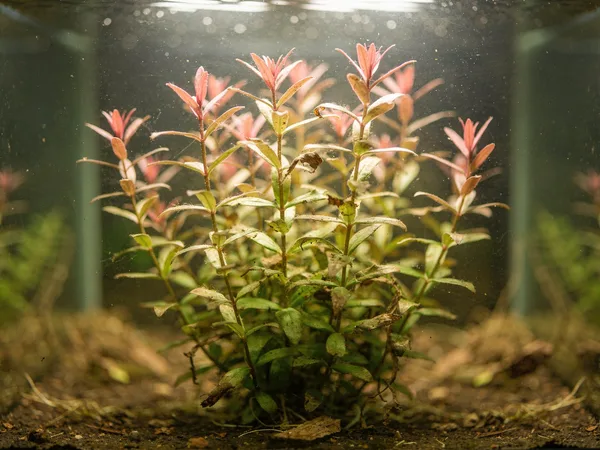
Indian Toothcup
Lythraceae
Rotala indica
A compact stem plant with small leaves that answer bright light with pink tips. It suits a nano tank and forgives more than most rotalas.
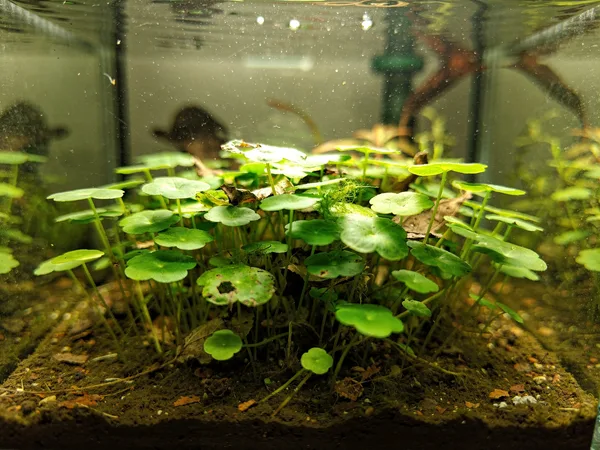
Japanese Clover
Araliaceae
Hydrocotyle tripartita
Tiny clover-shaped leaves on creeping stems that quickly close into a low green cushion. It grows without carbon dioxide and is the least fussy of the carpet plants — the fastest way to a green floor.
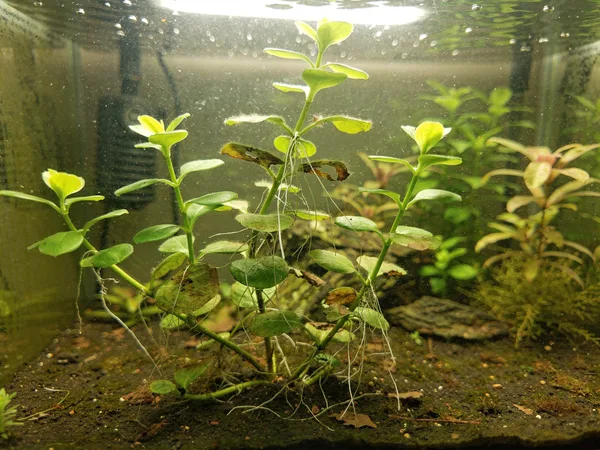
Japanese Cress
Brassicaceae
Cardamine lyrata
Round leaves on a thin trailing stem, growing in a clover-like pattern, with fine white roots hanging in the water. A marsh plant from East Asia that took well to aquariums, and one of the few that prefers cool water.
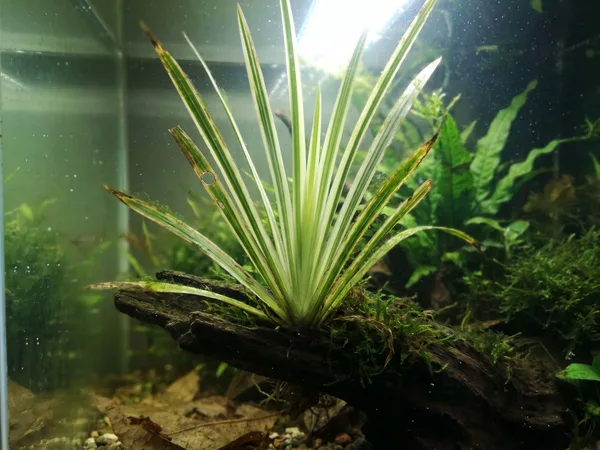
Japanese Rush
Acoraceae
Acorus gramineus
Stiff grass-like fans of leaves from East Asian wetlands. It is a marsh plant rather than a true aquatic — beautiful in a paludarium, slow and short-lived fully submerged.
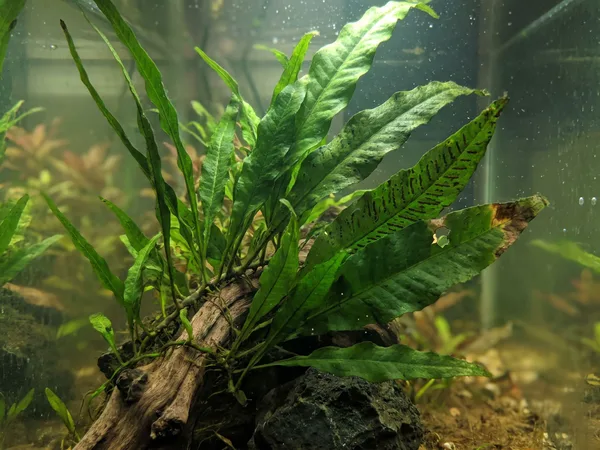
Java Fern
Polypodiaceae
Leptochilus pteropus
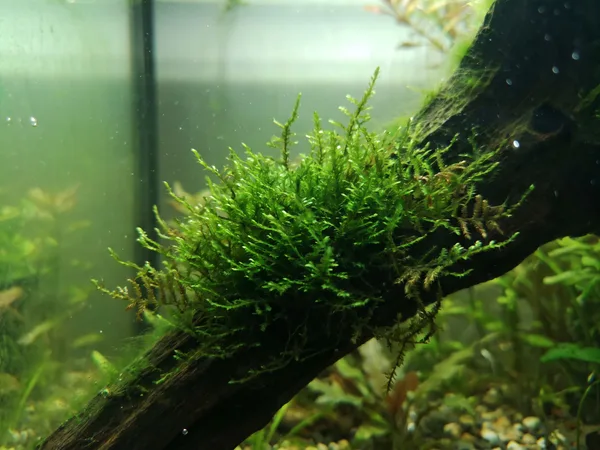
The plant most often recommended to a first-time aquarium: it grows tied to wood or stone, needs no special light and no carbon dioxide. Almost nothing kills it, which is why it has been in tanks for a hundred years.
Jungle Val
Hydrocharitaceae
Vallisneria americana
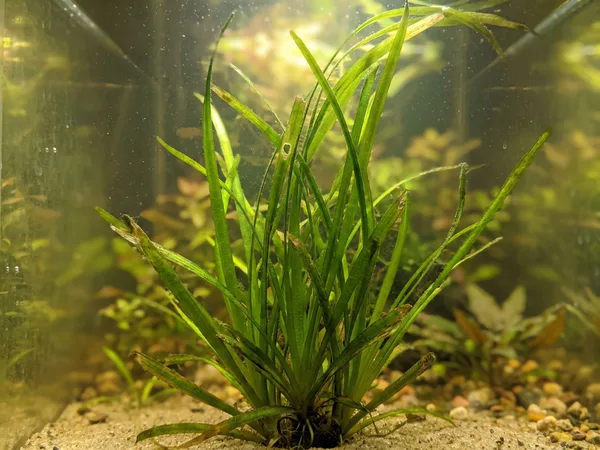
Long ribbon leaves that rise from the bottom and lie along the surface, the classic green backdrop of a big aquarium. It spreads by runners and fills a back wall on its own, without carbon dioxide or special care.
Lake Cress
Brassicaceae
Rorippa aquatica
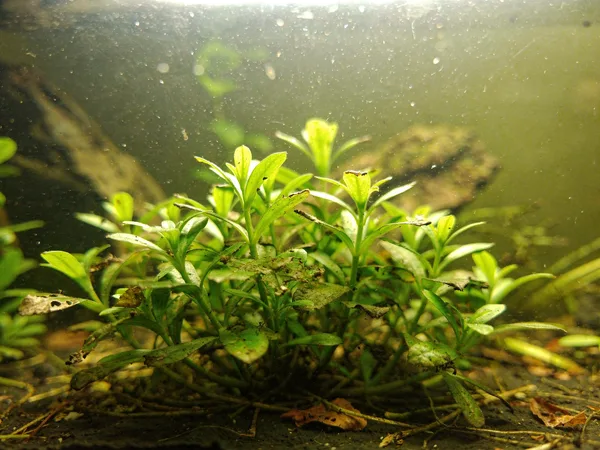
A rosette of soft leaves that change shape with conditions — from whole and rounded to deeply cut, sometimes on the same plant. It comes from cool North American backwaters and grows very slowly.
Lake Ludwigia
Onagraceae
Ludwigia lacustris
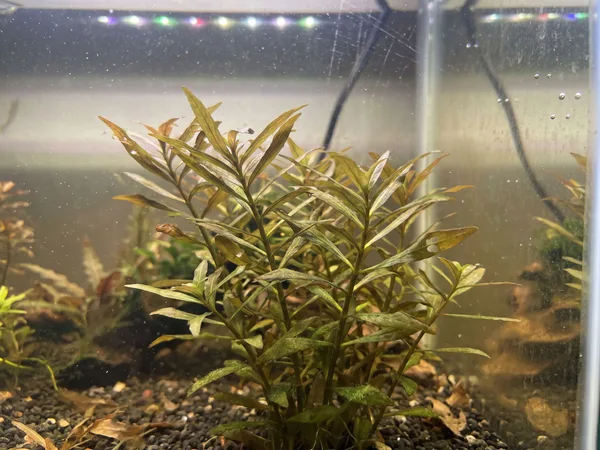
A natural hybrid from the eastern United States with narrow underwater leaves — like the needle-leaf ludwigia, but stronger growing and less fussy. Rare in the wild and still rare in the hobby.
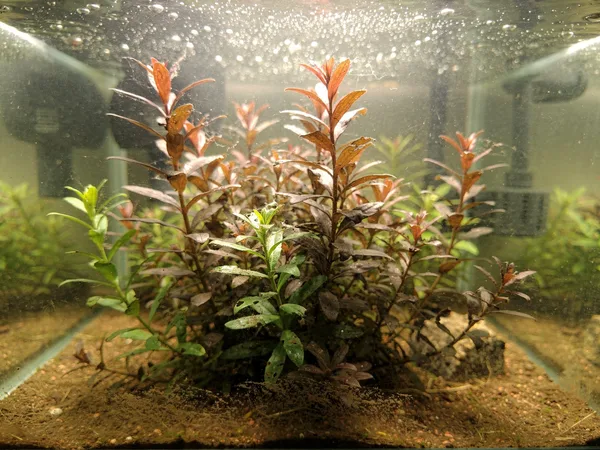
Lance-leaf Hygrophila
Acanthaceae
Hygrophila ringens
Narrow pointed leaves packed tightly on a branching stem, in green through reddish brown to purple. Sold under several trade names, and simpler to keep than its reputation suggests.
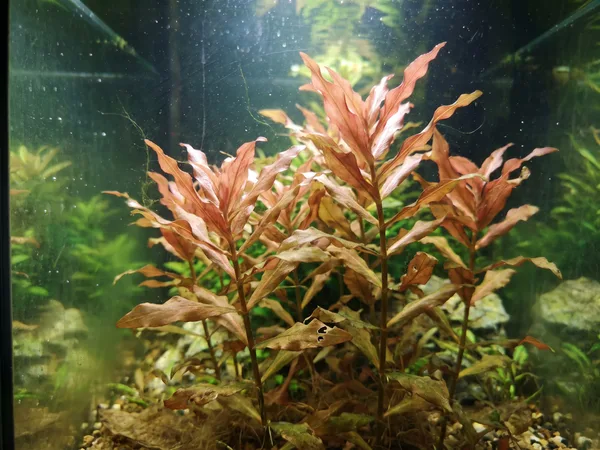
Large Ammannia
Lythraceae
Ammannia gracilis
A big stem plant with wavy leaves that turn from pale green to pink and red as the light gets stronger. Hardier than most red plants and forgiving of an ordinary tank.
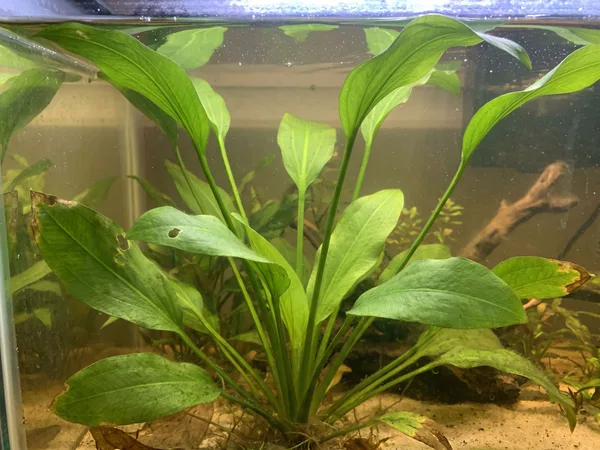
Large-flowered Sword
Alismataceae
Aquarius grandiflorus
One of the biggest sword plants: broad green leaves on a rosette that fills the back of a large tank. Slow, undemanding, and happiest in cool water.
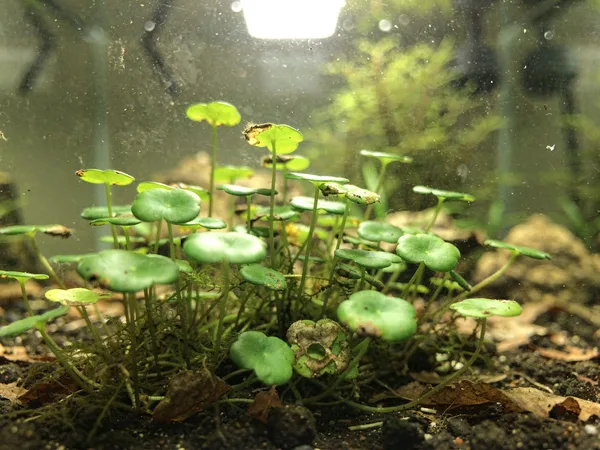
Lawn Pennywort
Araliaceae
Hydrocotyle sibthorpioides
Tiny round leaves like clover on creeping stems that run wherever there is room — over the substrate, up a stone, along a branch. The smallest and quickest of the pennyworts.
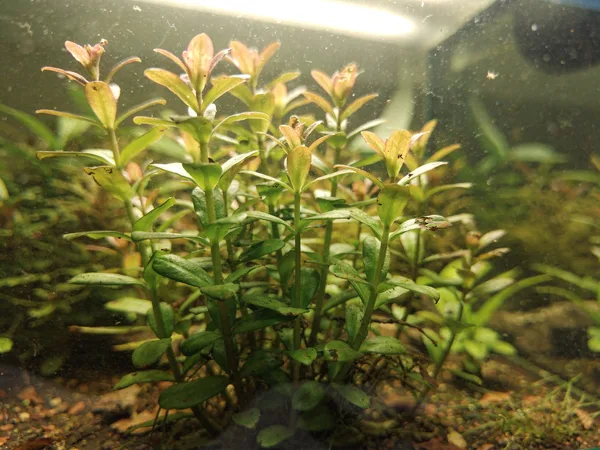
Lemon Bacopa
Plantaginaceae
Bacopa caroliniana
A sturdy stem plant with thick leaves that smell faintly of lemon when crushed. It grows slowly and needs little attention, which makes it one of the calmest plants for a first tank.
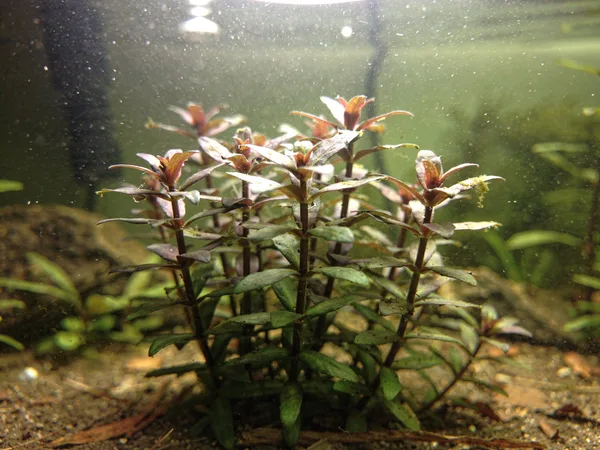
Limnophila aromatica 'Mini'
Plantaginaceae
Limnophila aromatica
A dwarf form of the rice paddy herb (Limnophila aromatica 'Mini'): the underwater leaves are often only 1–2.5 cm long, and under intense light they turn a splendid brownish red with a light-green midrib and stem.
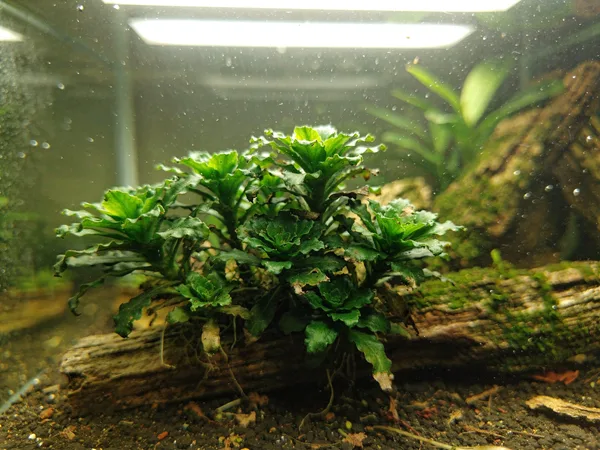
Little Star
Lamiaceae
Pogostemon helferi
Found by aquarists on the Thai–Burmese border and known in the hobby by its Thai name, dao noi, "little star". The crinkled, wavy-edged leaves radiate from a short stem and look unlike anything else in a planted tank.
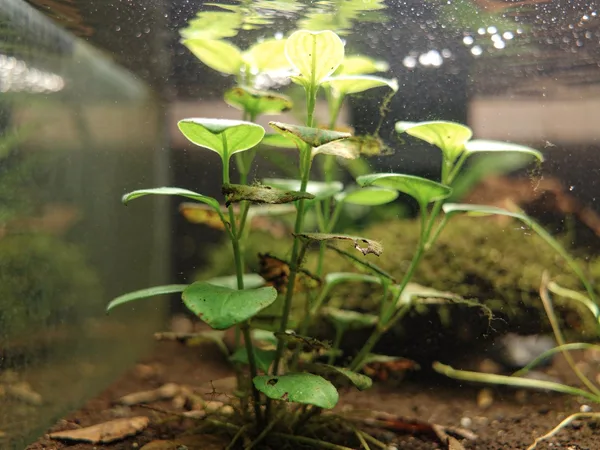
Lizard's Tail
Saururaceae
Saururus cernuus
A North American marsh plant with heart-shaped leaves that has been grown in aquariums since the days of the Dutch layouts. Under water it stays much smaller and neater than on land.
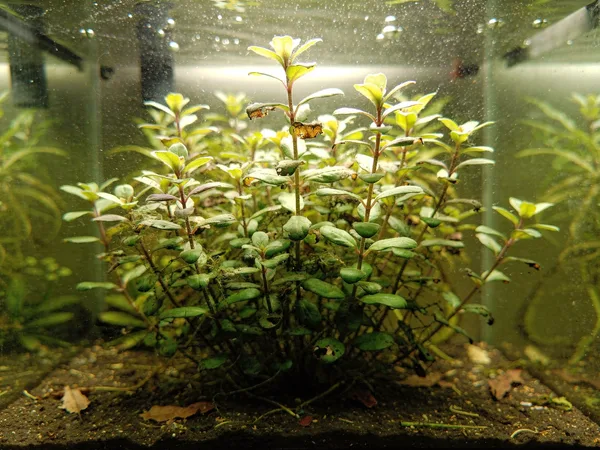
Lobelia cardinalis 'Kleine Form'
Campanulaceae
Lobelia cardinalis
A compact cultivated form of the cardinal plant (Lobelia cardinalis 'Kleine Form'): round, coin-shaped leaves and a much smaller size than the ordinary species.
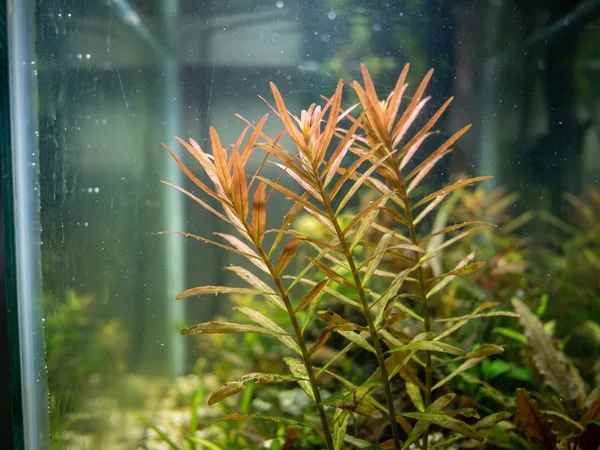
Lowland Rotala
Lythraceae
Rotala ramosior
The only rotala native to North America, and one of the reddest: straight, barely branched stems with narrow leaves that turn orange and red under strong light.
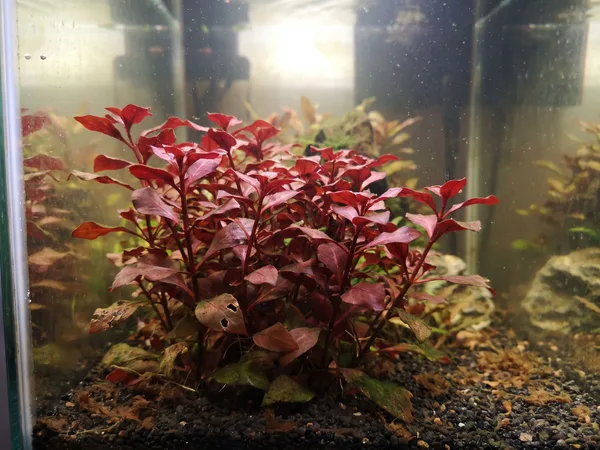
Ludwigia palustris 'Super Red'
Onagraceae
Ludwigia palustris
The marsh ludwigia 'Super Red' is a novelty from 2011–2012, also sold as Ludwigia sp. 'Red' or simply Ludwigia sp.: underwater it is deep to dark red even under not very strong light.
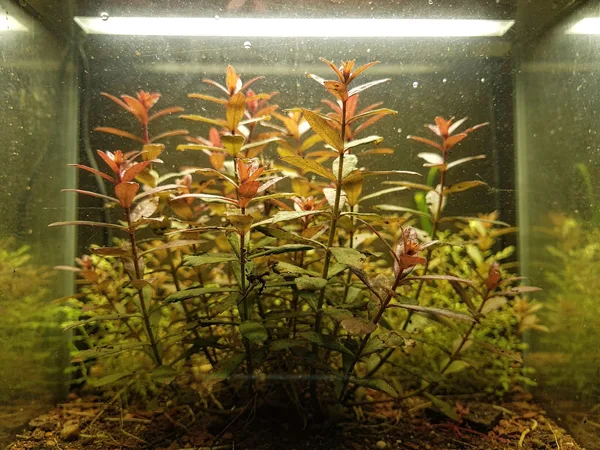
Ludwigia repens 'Mesakana'
Onagraceae
Ludwigia repens
A form of the red ludwigia (Ludwigia repens 'Mesakana'), known in the German hobby as the 'variegated ludwigia'; the leaves are a little larger and more brightly coloured than in the ordinary species, with a more…
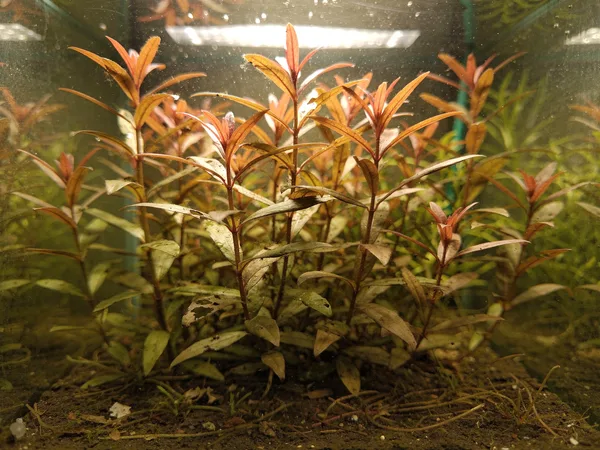
Ludwigia repens × arcuata
Onagraceae
Ludwigia repens
A natural hybrid of the red ludwigia and Ludwigia arcuata (Ludwigia repens × arcuata), common in Florida; sold as 'narrow-leaf ludwigia' with lance-shaped leaves about 5 cm long and 0.5 cm wide.
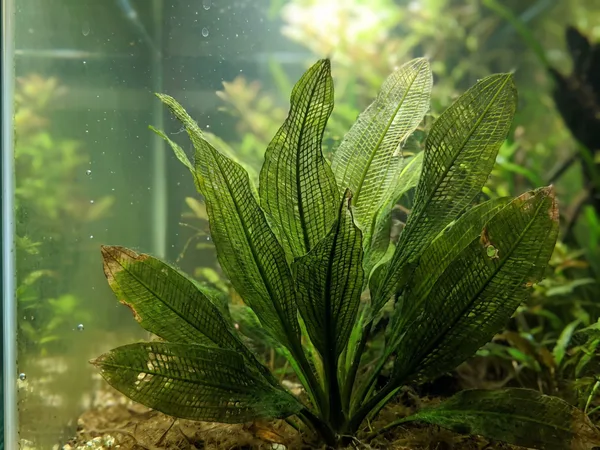
Madagascar Lace Plant
Aponogetonaceae
Aponogeton madagascariensis
The plant whose leaves are a skeleton of veins with holes between them — nothing else in an aquarium looks like it. Beautiful and genuinely demanding: clean water and patience are the price.
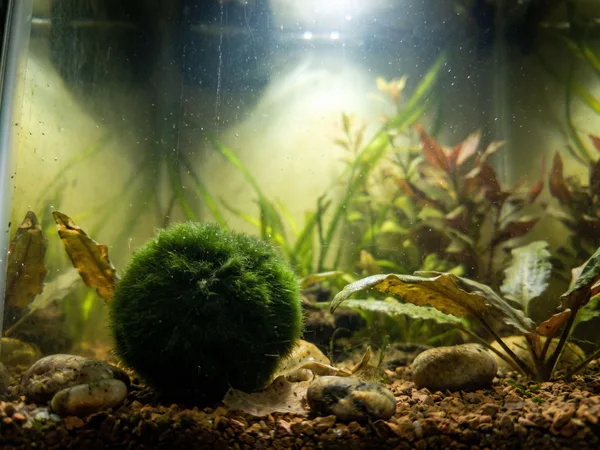
Marimo Moss Ball
Pithophoraceae
Aegagropila linnaei
A green velvet ball that is not a plant at all but a colony of algae, rolled into shape by the waves of cold northern lakes. The one alga in the hobby that is kept on purpose.
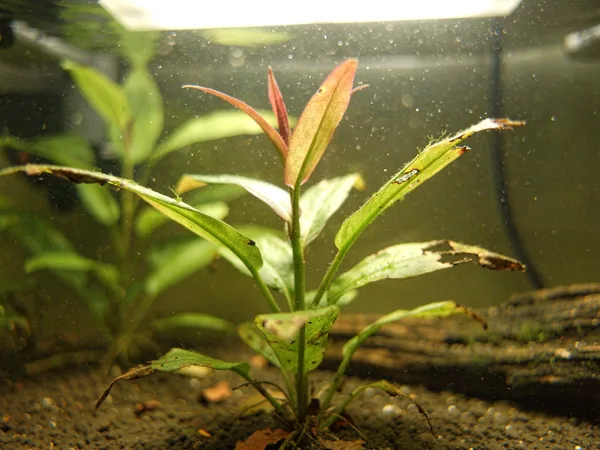
Marsh Dewflower
Commelinaceae
Murdannia keisak
Narrow leaves on thin upright stems that look like young bamboo — a loose, untidy, natural look rather than a neat hedge. In Asia it grows in rice fields.
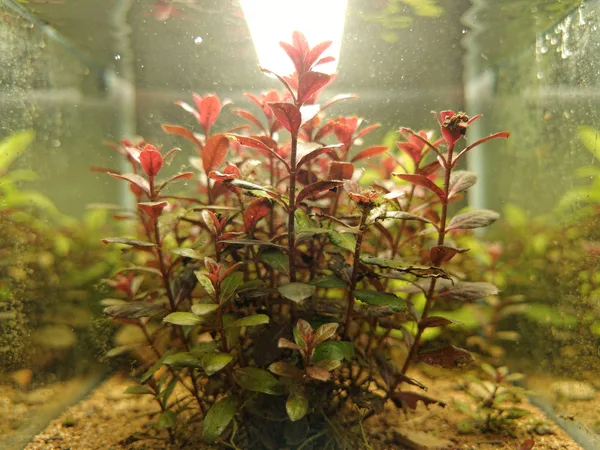
Marsh Ludwigia
Onagraceae
Ludwigia palustris
A red plant that manages without carbon dioxide and asks only for decent light. It branches readily, so a few stems soon become a bush.
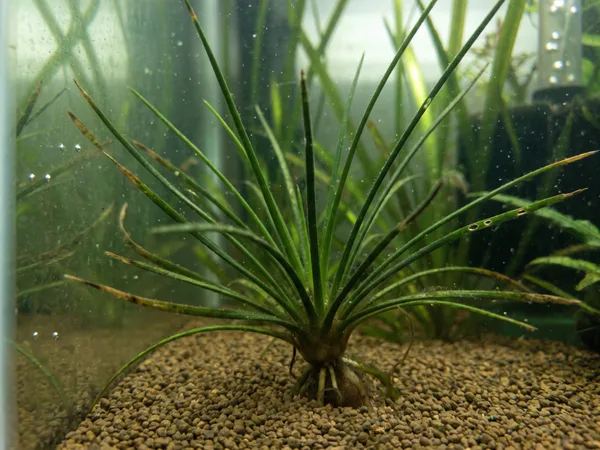
Mediterranean Quillwort
Isoetaceae
Isoetes longissima
A rosette of stiff rush-like leaves from Mediterranean waters. Quillworts are ancient plants — the nearest living relatives of the giant club mosses of the coal forests — and they reproduce by spores, not seed.
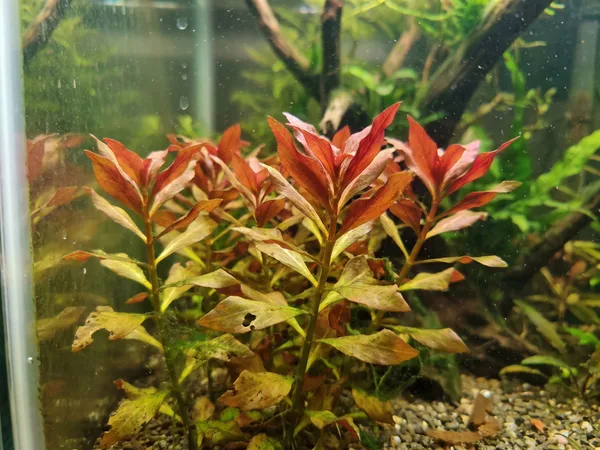
Mermaid Weed
Haloragaceae
Proserpinaca palustris
A stem plant with saw-toothed, needle-like leaves that turn copper and red in strong light. It changes shape completely once it settles under water — the leaves you buy are not the leaves you keep.
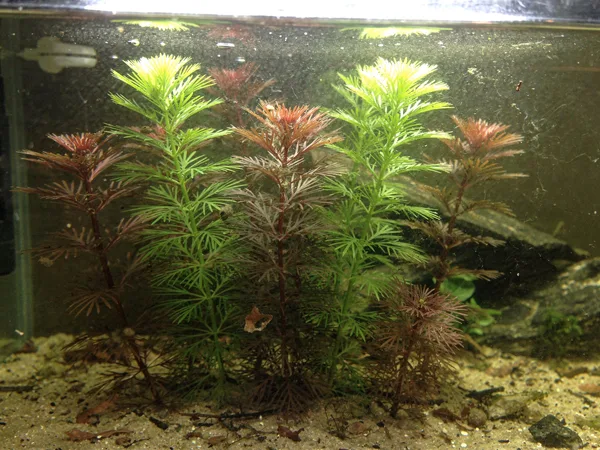
Mexican Cabomba
Cabombaceae
Cabomba palaeformis
A fan-leaved cabomba from Central America, grown in a green and a red-brown form. Unlike its relatives it puts up with hard water and with warmth.
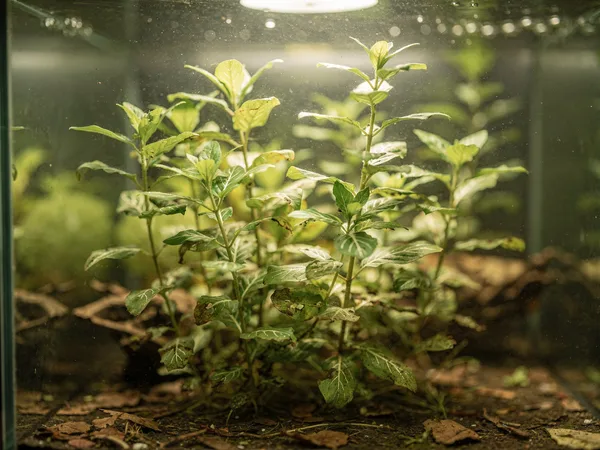
Mexican Oak Leaf
Asteraceae
Shinnersia rivularis
Leaves shaped like an oak leaf on a fast-growing stem — an unusual outline for an aquarium plant. It grows very quickly and prefers water on the cool side.
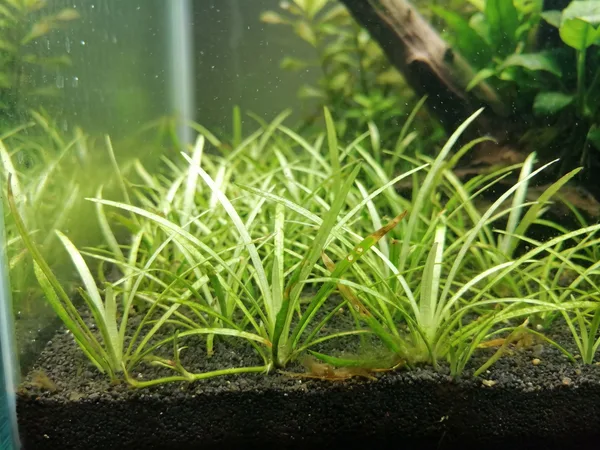
Micro Sword
Apiaceae
Lilaeopsis minor
Short blade-like leaves that spread by runners into a neat lawn. The look is closest to real grass of anything in the hobby, and it needs no carbon dioxide.
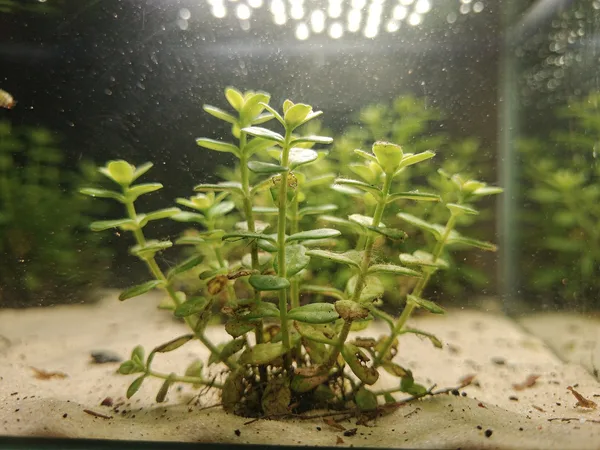
Moneywort
Plantaginaceae
Bacopa monnieri
A slow, sturdy stem plant with thick little leaves, at home in wet ground all over the tropics. It grows in dim light and hard water, and it is one of the few beginner plants that never runs away with the tank.
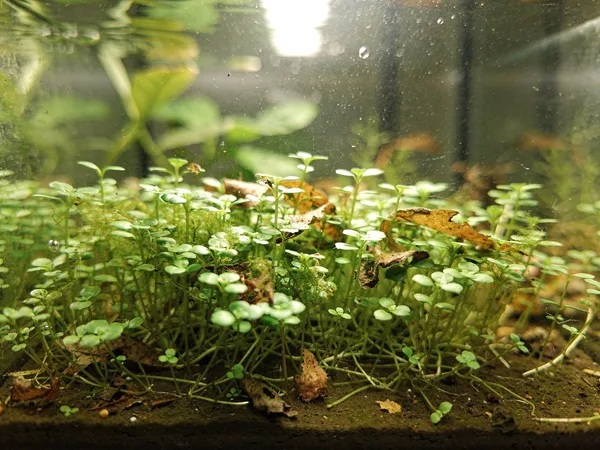
Monte Carlo
Linderniaceae
Micranthemum tweedei
Round leaves on creeping stems that knit into a low green carpet — the easiest of the modern carpet plants and the usual first choice for a lawn.
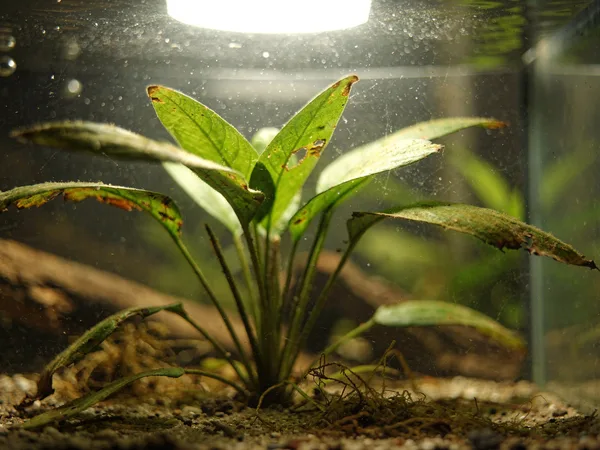
Mud Sword
Alismataceae
Aquarius palifolius
A large, fast, undemanding sword plant that sooner or later leaves the water. Fine as a young plant in an aquarium, and at its best as a marsh plant in an open tank or paludarium.
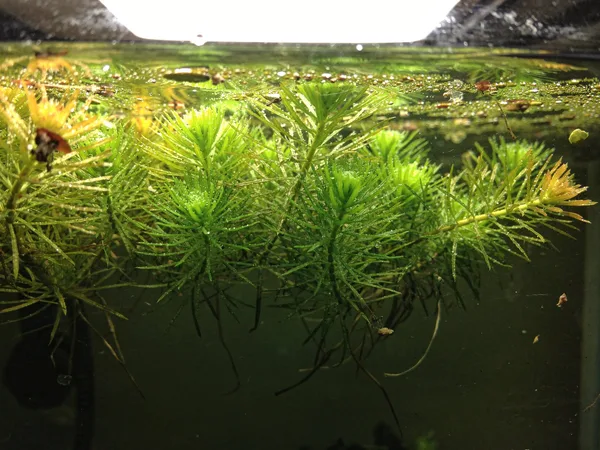
Myriophyllum aquaticum 'Green'
Haloragaceae
Myriophyllum aquaticum
A form of parrot's feather known as the 'male plant' of the species: above water it produces male flowers, while the ordinary form produces female ones. Underwater the leaves stay light to medium green even in strong…
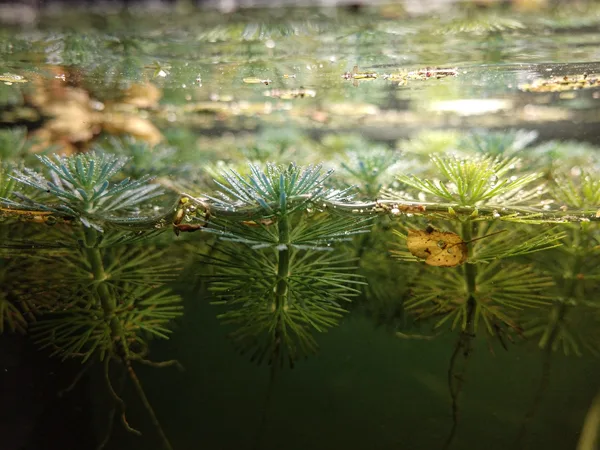
Myriophyllum aquaticum ('Normalform')
Haloragaceae
Myriophyllum aquaticum
The ordinary, 'normal' form of parrot's feather: large, with female flowers above water, and light orange-brown underwater leaves under bright light. This is the form most often found in the trade.
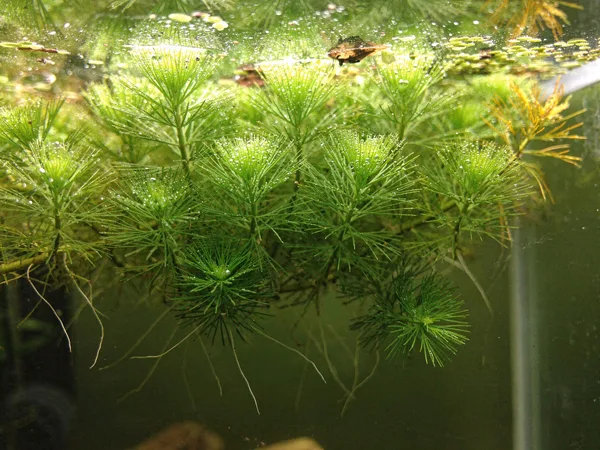
Myriophyllum aquaticum var. santacatarinense
Haloragaceae
Myriophyllum aquaticum
A variety of parrot’s feather from the state of Santa Catarina in southeastern Brazil. Less demanding than the ordinary form: it has fewer leaf segments, they are wider, the colour is a lighter green, and it grows out…
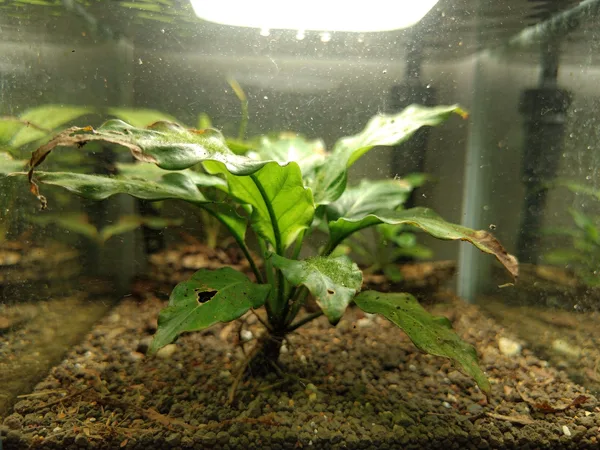
Nair's Lagenandra
Araceae
Lagenandra nairii
A small plant from a single waterfall in Kerala, where it grows on shaded river banks and spends the rainy season under water. The only lagenandra that spreads by runners, the way crypts do.
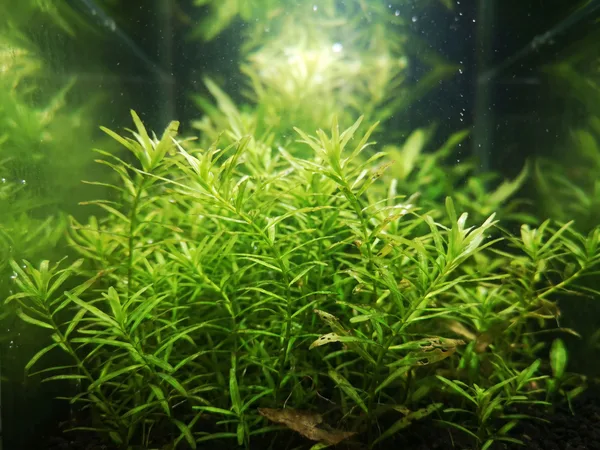
Narrow Leaf Anacharis
Hydrocharitaceae
Elodea najas
One of the toughest plants in the hobby: it grows in almost any water, at any light, planted or simply floating. The classic first plant, and a fast one at soaking up excess nutrients.
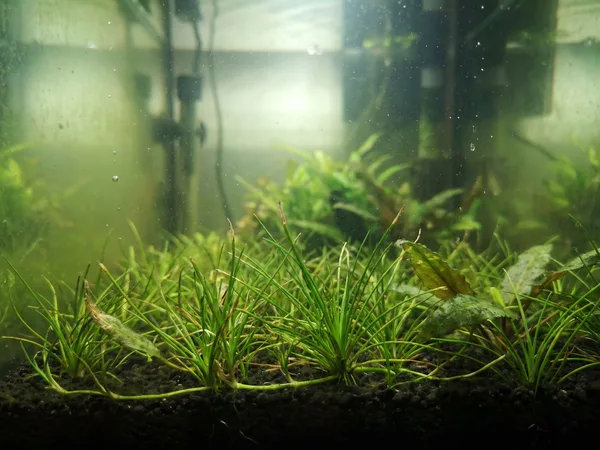
Narrow Leaf Micro Sword
Apiaceae
Lilaeopsis mauritiana
A grass lawn for the front of the tank, with blades finer than the usual micro sword. It spreads by runners and closes into a carpet on its own — slowly.
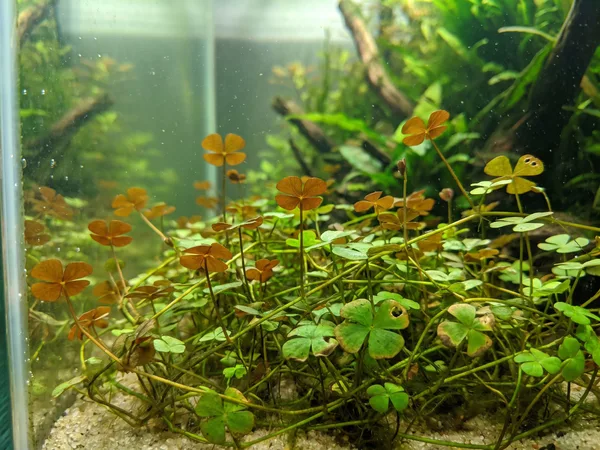
Narrow-leaf Clover
Marsileaceae
Marsilea angustifolia
A clover fern with narrower leaflets and thicker stems than its relatives, so the mat it makes is noticeably denser. New leaves come up orange-brown and turn green with age.
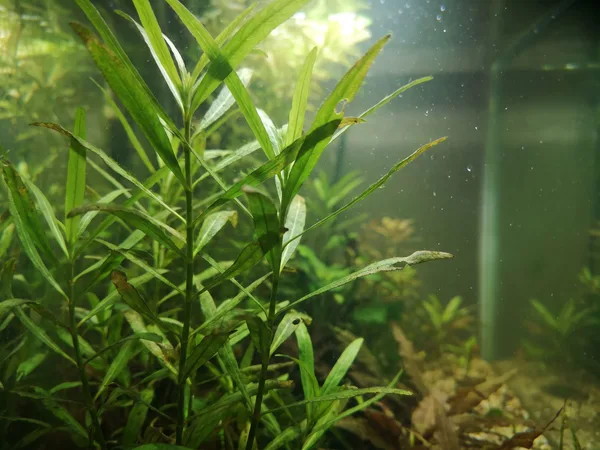
Narrow-leaf Hygrophila
Acanthaceae
Hygrophila angustifolia
A narrow-leaved hygrophila from Australia and New Guinea. It belongs to a group of closely related plants whose names have been shuffled between one another for years.
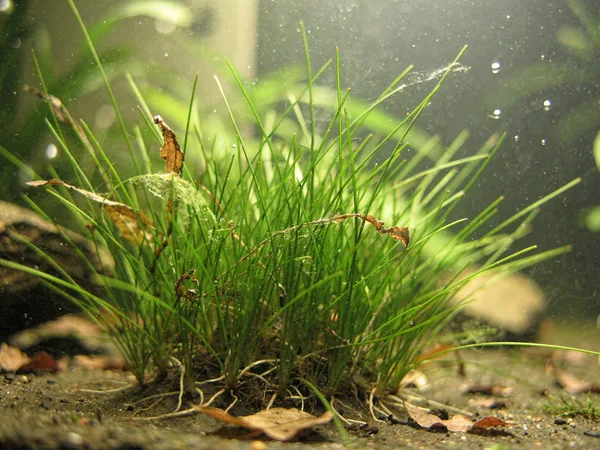
Needle Spikerush
Cyperaceae
Eleocharis acicularis
A grass-like sedge that spreads by underground runners into a fine lawn. It grows wild across most of the northern hemisphere, which is why it tolerates cool water that would stop a tropical carpet plant.
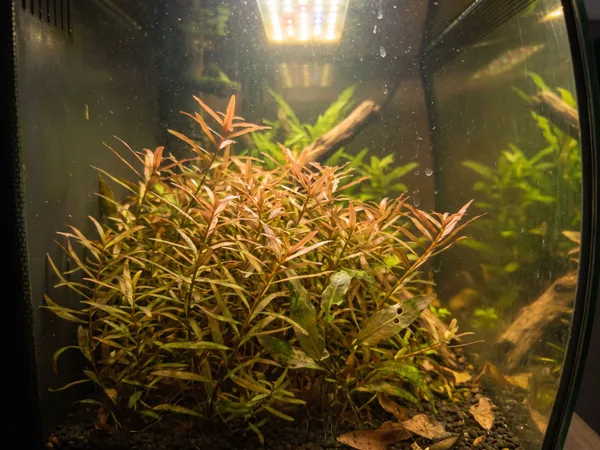
Needle-Leaf Ludwigia
Onagraceae
Ludwigia arcuata
A ludwigia with narrow, almost needle-like leaves that turn bronze and red in good light. Finer in texture than the usual red plants and easier than most of them.
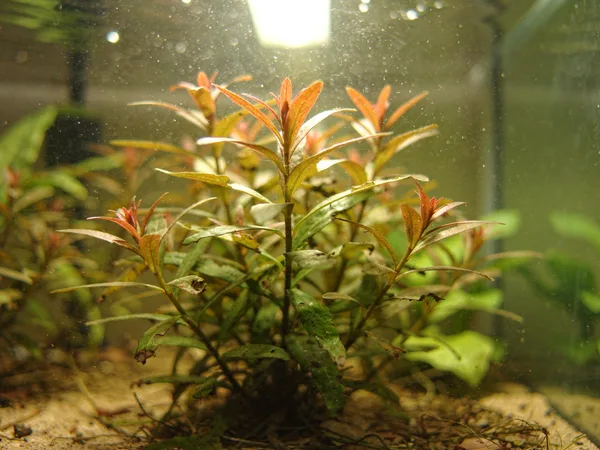
Needle-leaf Ludwigia
Onagraceae
Ludwigia brevipes
Thin needle-like leaves on a sturdy stem, turning orange-red at the tips. Close kin to the narrow-leaf ludwigia and a little easier to keep.