- Light
- low
- Difficulty
- easy
- Height
- 10 – 50 cm (3.9 – 20 in)
- Temperature
- 4 – 30 °C (39 – 86 °F)
- Alabama
- Albania
- Algeria
- Angola
- Arizona
- Arkansas
- Austria
- Belgium
- Botswana
- British Columbia
- Bulgaria
- California
- Cape Provinces
- Colombia
- Connecticut
- Corse
- Costa Rica
- Cuba
- Czechia-Slovakia
- DR Congo
- Delaware
- District of Columbia
- Dominican Republic
- Florida
- France
- Georgia
- Germany
- Great Britain
- Greece
- Guatemala
- Haiti
- Hungary
- Idaho
- Illinois
- Indiana
- Iowa
- Iran
- Italy
- Jamaica
- Kansas
- Kentucky
- KwaZulu-Natal
- Lebanon-Syria
- Lesotho
- Louisiana
- Maine
- Maryland
- Massachusetts
- Mexico Central
- Mexico Gulf
- Mexico Northeast
- Mexico Northwest
- Mexico Southeast
- Mexico Southwest
- Michigan
- Minnesota
- Mississippi
- Missouri
- Morocco
- NW. Balkan Pen.
- Namibia
- Nebraska
- Netherlands
- New Brunswick
- New Hampshire
- New Jersey
- New Mexico
- New York
- Newfoundland
- North Carolina
- North Caucasus
- Northern Provinces
- Nova Scotia
- Ohio
- Oklahoma
- Ontario
- Oregon
- Palestine
- Pennsylvania
- Poland
- Portugal
- Puerto Rico
- Québec
- Rhode I.
- Romania
- Sardegna
- Socotra
- South Carolina
- Spain
- Switzerland
- Tennessee
- Texas
- Transcaucasus
- Tunisia
Tank conditions
- Leaf colour
- green, red, pink or purple
- Plant type
- stem plant
- Growth rate
- fast
- CO₂ demand
- low
- Tolerates light
- medium – high
- pH
- 5 – 7
- Carbonate hardness
- 0 – 22 °dKH
- Placement
- red accent, background +3 red accent, background, midground, nano tank, Dutch street
- Propagation
- seeds, cuttings
- Grows emersed
- yes
Care and keeping
Appearance
Keeping
Placement
Propagation
Fish and this plant
Water conditions match
The water suits 841 of 1249 species in the catalogue — these are the ones people look up most often.
ButterflyfishJulii CorydorasRed-finned ParotocinclusGastromyzon monticolaEgg-shaped GoldfishFlame TetraGardner's KillifishAfrican TetraHypsolebias picturatusCommon ZaccoLabeo BicolorGambusiaFlying barbGastromyzon scitulusAlbino Zebra DanioGeophagus BrokopondoHomaloptera bilineataRed-tailed RasboraBoraras naevusLampeye KillifishSpotted Raphael CatfishCorydoras melanotaeniaFestivum cichlidPseudomugil paskai
Will eat this plant
These species damage plants, especially when their diet is short of vegetable food.
Bengal LoachZebra LoachBurmese Border LoachEmperor BotiaMarbled HeadstanderPellegrin's LeporinusLeporinus striatusFalse Black TetraCommon MetynnisMylossoma duriventreRed Whiptail CatfishMoonlight GouramiMelanotaenia parva
Will uproot it
These species dig through the substrate and pull rooted plants out.
Marble LoachPeacock EelForktail LoachGuntea LoachLong-nosed LoachHorseface LoachPearlscaleBlack Moor GoldfishShubunkinPainted PlecoFeatherfin SynodontisReddish Mystus CatfishBlue AcaraGeophagus altifronsGeophagus winemilleriPearl CichlidRed-spotted CichlidHaplochromis philanderRed ChromideJack Dempsey cichlid
Matching water does not mean the fish will leave the plant alone.
Cultivars
The same plant with a different look: light, water and care are shared with the species.
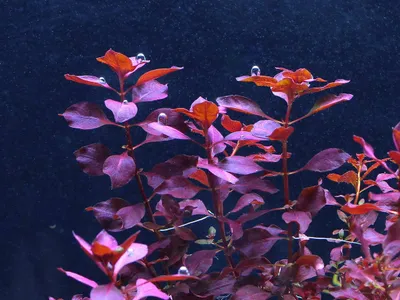
Other varieties: Ludwigia palustris × repens, Ludwigia palustris 'Green', Ludwigia palustris Red, Ludwigia Palustris Sphaerocarpa, Ludwigia sp. 'Red', Ludwigia 'Mini Super Red', Ludwigia sp. 'Super Red'
Scientific and other names, conservation status
- Other scientific names
- Isnardia palustris L., Ludwigia × kentiana E. J. Clement, Dantia palustris, Isnardia ascendens, Isnardia nitida, Isnardia palustris, Isnardia palustris submersa, Isnardia palustris terrestris, Isnardia palustris americana, Isnardia palustris riparia, Isnardia palustris rivularis, Jussiaea isnardia, Ludwigia apetala, Ludwigia nitida, Ludwigia palustris elongata, Ludwigia palustris riparia, Ludwigia palustris rivularis, Ludwigia palustris submersa, Ludwigia palustris americana, Ludwigia palustris nana, Ludwigia palustris pacifica, Ludwigia palustris inundata, Ludwigia palustris liebmannii, Ludwigia palustris palustris, Ludwigia palustris typica, Peplis portula, Quadricosta palustris, Tiphogeton palustre
- Ludwigia palustris
- (L.) Elliott
- Family
- Onagraceae
- Conservation status
- LC